English
Looselay PVC Flooring vs Self-Adhesive Vinyl: Practical Applications, Selection
Home > News > Industry News > Looselay PVC Flooring vs Self-Adhesive Vinyl: Practical Applications, Selection

Content
Choosing between looselay PVC flooring and self-adhesive vinyl plank can feel like a trade-off between speed and security. Both are practical, waterproof PVC flooring solutions that avoid the mess of wet adhesive, yet they behave very differently during installation and over years of service. This guide compares the two on installation speed and long-term adhesion, so you can match the right product to your project.
Looselay PVC flooring is a loose-lay vinyl plank that is neither clicked nor glued. It is manufactured with a dense, dimensionally stable core and a textured backing that grips the subfloor. Once the planks are cut and placed, their combined weight and surface friction hold them in position. In most cases, only the perimeter edges or seams use a small amount of adhesive or transition tape.
Self-adhesive vinyl plank, also called peel-and-stick PVC flooring, carries a pre-applied pressure-sensitive adhesive on its backing. A protective film is removed at installation, and the plank is pressed firmly into place on a clean, smooth subfloor. The bond begins immediately, and the floor can usually bear light traffic within a few hours.
If your schedule matters, loose lay is the clear speed champion. Because there is no glue to spread, no release film to remove, and no locking system to align, a competent installer can cover the same floor area noticeably faster than with most other PVC methods. The planks are simply cut to size, laid in a staggered pattern, and pressed down. There is no curing or drying time between steps, so the room can often be used immediately after the edges are secured.
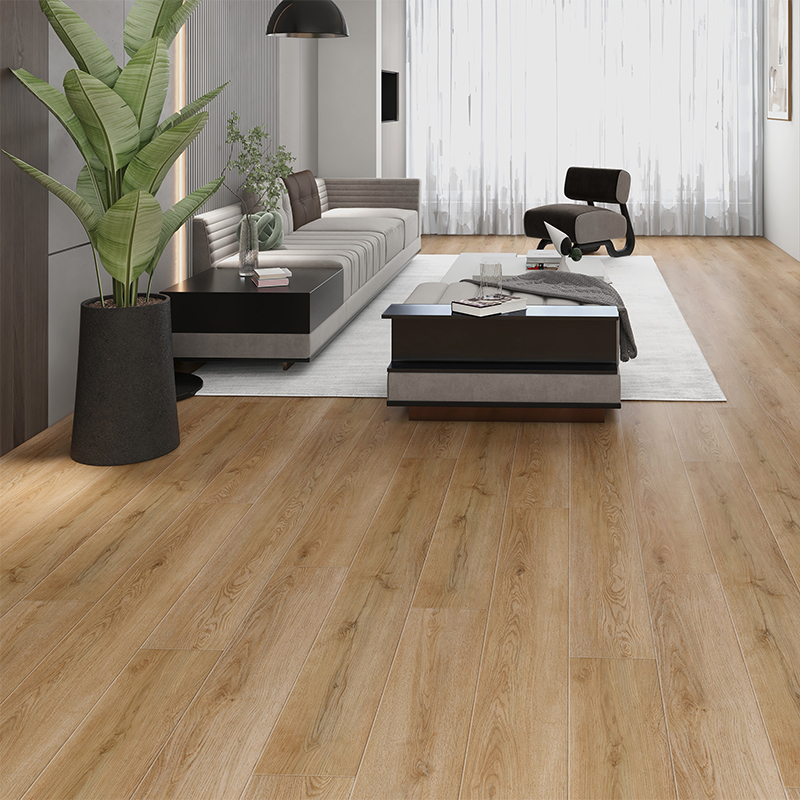 Commercial Waterproof Glue-Free Vinyl Plank FlooringThis high-density looselay PVC flooring uses a friction-based backing for fast, adhesive-free installation. Its Bfl-s1 fire rating, waterproof core, and durable wear layer make it a practical choice for busy commercial spaces needing quick deployment and long-term stability.View Product →
Self-adhesive installation is also fast, but each plank demands more care. The adhesive grabs on contact, so the plank must be positioned correctly on the first attempt. A roller is recommended to develop full bond strength and to remove trapped air. Expect the job to take a little longer than loose lay, especially in rooms with many cuts around doorways or cabinets.
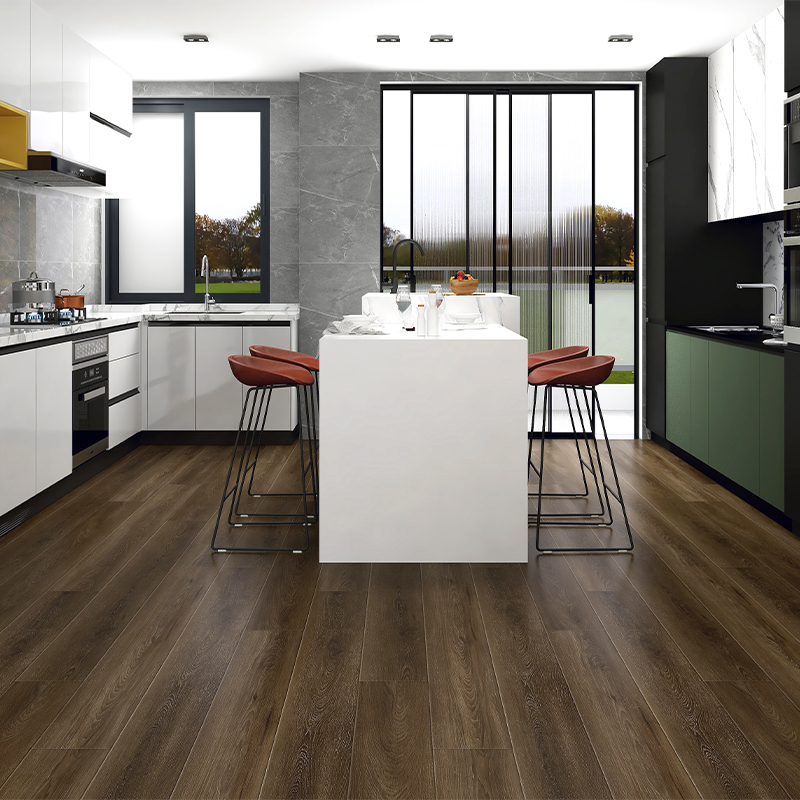 Pre-Glued Peel-and-Stick Self-Adhesive PVC FlooringFeaturing a factory-applied pressure-sensitive adhesive, this peel-and-stick PVC flooring offers rapid, budget-friendly installation. With a Bfl-s1 fire rating and waterproof composition, it suits high-volume renovation projects, though alignment demands care during placement.View Product →
Adhesion is not just about the first hour; it is about how the floor performs in the fifth year. Looselay PVC flooring has no adhesive layer to dry out, so it does not suffer from the classic failure modes of lifted edges or peeling corners. Its stability comes from the mass of the plank and the grip of the backing against a flat subfloor. The main risk is lateral movement under heavy point loads or shifting furniture, which is controlled by perimeter adhesive, transition strips, and proper subfloor flatness.
Self-adhesive vinyl plank relies on a pressure-sensitive adhesive that can lose strength over time. Heat from direct sunlight, high indoor temperatures, and moisture migrating through the subfloor can soften the adhesive and cause edges to lift. The bond also depends heavily on how clean and smooth the subfloor was at installation. A dusty or painted surface can reduce the contact area and lead to early failure.
| Factor | Looselay PVC | Self-Adhesive Vinyl Plank |
|---|---|---|
| Bonding mechanism | Friction and plank weight | Pressure-sensitive adhesive |
| Heat resistance | No adhesive to soften | Adhesive can soften in heat |
| Moisture sensitivity | Low, but subfloor should be dry | Moderate to high |
| Edge peeling risk | Low | Higher over time |
| Plank replacement | Simple, lift and swap | Requires scraping and cleaning |
For spaces where a permanent chemical bond is preferred, a dry-back PVC plank with adhesive applied at the job site is the conventional alternative. It delivers maximum holding power but adds labour time and requires careful adhesive selection.
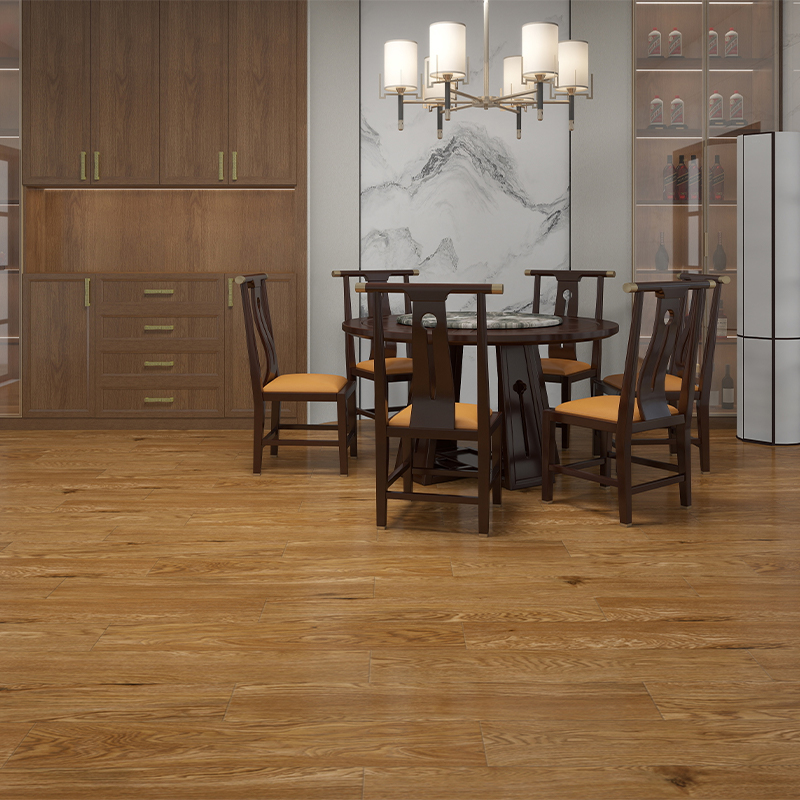 Waterproof Adhesive-Fixed Dry Back PVC Wood Plank FlooringThis dry-back PVC plank is installed with a job-site adhesive for a permanent, secure bond. Its slim 1.5–3mm profile, waterproof properties, and Bfl-s1 fire rating make it a reliable choice for moisture-prone areas where long-term holding power is essential.View Product →
Both looselay and self-adhesive PVC flooring demand a clean, dry, and flat subfloor. The tolerance is typically within 3 mm over a 2 m straightedge. Any high spots or depressions should be corrected with levelling compound before installation begins.
For self-adhesive planks, the subfloor must also be free of dust, oil, wax, and old adhesive residue. Smooth surfaces such as well-sanded plywood or existing vinyl are ideal. For looselay planks, the subfloor must be flat enough to maintain full surface contact; a slightly textured surface can actually improve grip.
If the project uses a floating PVC or SPC system elsewhere in the building, an acoustic underlayment can reduce sound transmission and add thermal comfort. Choose a thin, dense underlayment that will not create a soft base under the floor.
Long-term adhesion questions often turn into repair questions. With looselay PVC flooring, a damaged plank can be lifted without prying tools and swapped for a new one in minutes, provided you have a spare plank from the same batch. Seams can be re-secured with a little seam adhesive if they open over time.
With self-adhesive vinyl plank, replacement is more involved. The old plank must be heated, peeled away, and the residual adhesive scraped from the subfloor before the new plank can be laid. Over a large installation, this can turn a small repair into a half-day job.
Routine maintenance is similar for both: sweep or vacuum regularly, damp mop with a pH-neutral cleaner, and avoid steam mops that can push moisture into seams.
Consider the room, the traffic, and the condition of the subfloor before deciding.
Yes, in most layouts. Loose lay removes the alignment and pressing steps required for peel-and-stick planks, and there is no adhesive to set. Most of the time saving comes from fewer steps around seams and perimeter areas.
Looselay avoids adhesive failure altogether because it uses no adhesive layer; its stability depends on a flat subfloor and perimeter fixing. Self-adhesive planks start with a strong bond but can lose adhesion around edges over time in hot or damp conditions.
Yes, but the concrete must be dry, cured, and free of dust and sealers. A moisture test is recommended before installation.
A thick foam underlayment is not recommended because it can reduce friction and allow the floor to move. A thin, dense underlayment may be acceptable in some systems, but always check the product specification first.
With proper subfloor preparation and normal indoor conditions, the bond can last for many years. Direct sunlight, high temperatures, and moisture can shorten its service life.
Both looselay PVC flooring and self-adhesive vinyl plank have a place in modern flooring projects. Loose lay wins on installation speed and long-term adhesion reliability, while self-adhesive offers an immediate bond and a simple DIY experience. When you understand the subfloor, the environment, and the user's priorities, the better choice becomes clear.
For a closer look at product specifications and installation methods, browse the resources section or contact our team for samples and technical guidance.