Decorative PS Line Molding Suppliers
Floors in commercial high-traffic areas face a relentless daily routine: thousands of foot passes, ...
Read More


information to be updated
PS Skirting has many shapes and dimension, is a decorative skirting line for all kinds of flooring. The color for PS skirting is usually white; it could be the same color as PVC flooring as well.


Committed to green and sustainable development, we use high-tech eco-friendly materials to replace natural wood and actively contribute to protecting forest resources and creating a healthier living environment.
Floors in commercial high-traffic areas face a relentless daily routine: thousands of foot passes, ...
Read MoreWalk into any flooring showroom and you will hear "PVC," "vinyl," and "SPC" used almost interchang...
Read MoreWhy Kitchens Demand a Different Approach to Flooring A kitchen floor works harder than almost any o...
Read MoreFor architects, contractors, and property owners, selecting the right floor skirting is a decision that balances upfront investment, long-term upkeep, and aesthetic durability. While traditional wood skirting has been a standard for decades, modern polymer alternatives—particularly ps skirting—are increasingly chosen for their cost efficiency and minimal maintenance requirements. This article provides a rigorous, data-driven comparison between ps skirting board and natural wood, examining material properties, lifecycle costs, and daily care routines. We also introduce how Jiangsu Tiande New Material and Technology Co., Ltd. leverages advanced manufacturing to produce high-performance polystyrene floor skirting profile solutions that outperform wood in moisture-prone and high-traffic environments.
At its core, ps skirting (polystyrene skirting) is an extruded thermoplastic profile, typically white or color-matched to flooring. Its structure is homogeneous, closed-cell, and inherently resistant to water absorption. In contrast, solid wood skirting—whether pine, oak, or MDF-based—is hygroscopic, meaning it expands, contracts, and warps with humidity changes. Jiangsu Tiande New Material and Technology Co., Ltd. produces its polystyrene floor skirting profile with precise dimensional stability, ensuring that joints remain tight even in fluctuating indoor climates. Wood, by comparison, requires acclimatization before installation and often develops gaps or cracks over seasons. The manufacturing process for decorative PS line molding also allows for continuous lengths and seamless corners, reducing waste and installation time—a clear cost advantage from the outset.
When evaluating cost, the analysis must separate material price, labor, and ancillary expenses. On a per-linear-meter basis, high-quality wood skirting (e.g., primed finger-jointed pine) typically ranges 20–40% higher than ps skirting board of comparable dimensions. However, the real cost differential emerges during installation. Wood requires nail guns, countersinking, putty filling, sanding, and at least two coats of paint or stain—each step adding labour hours and material costs. Polystyrene floor skirting profile from Jiangsu Tiande New Material and Technology Co., Ltd. is designed for adhesive or clip-on installation, eliminating the need for nails, filler, or painting (since it comes pre-finished in white or custom colors). The table below summarizes the key cost drivers:
| Cost Factor | PS Skirting | Wood Skirting (primed) |
| Material price (per m) | $2.50 – $4.00 | $4.00 – $8.00 |
| Installation time (min/m) | 2–3 (adhesive) | 8–12 (nailing + finishing) |
| Required tools | Adhesive gun, saw | Nailer, putty, sander, brushes |
| Painting/finishing cost | $0 (pre-finished) | $1.50 – $3.00/m (labour+material) |
| Waste factor | 5–8% | 15–20% (knots, splitting) |
As the data indicate, decorative PS line molding reduces total installed cost by roughly 35–50% for a typical room, even before considering long-term maintenance. This makes ps skirting an economically superior choice for large-scale residential or commercial projects, a fact frequently highlighted by Jiangsu Tiande New Material and Technology Co., Ltd. in its project consultations.
Maintenance is where the divergence between ps skirting board and wood becomes most pronounced. Wood skirting is porous; it absorbs dust, grease, and moisture, leading to stains that are difficult to remove. Regular maintenance for wood includes dusting, occasional re-sanding, and repainting every 2–3 years in active households. Moreover, wood is vulnerable to impact—dents and scratches are permanent unless filled and refinished. In contrast, polystyrene floor skirting profile is non-porous, stain-resistant, and can be cleaned with a damp cloth and mild detergent. Its closed-cell structure repels water, making it ideal for kitchens, bathrooms, and basements where wood would swell or rot. Jiangsu Tiande New Material and Technology Co., Ltd. engineers its decorative PS line molding with UV-stabilized pigments, ensuring that white profiles do not yellow over time—a common complaint with lower-grade polymers.
For ps skirting, the cleaning protocol is simple and infrequent. Use a soft microfiber cloth or a vacuum with a brush attachment to remove loose dust. For stubborn marks, a solution of warm water and neutral pH soap is sufficient. Avoid abrasive pads or solvent-based cleaners, as they may dull the matte or gloss finish. Wood skirting, by contrast, demands specialized wood cleaners, periodic waxing, and immediate attention to spills to prevent water rings. The time saved in weekly cleaning alone makes ps skirting board the preferred choice for busy commercial settings, such as offices and retail spaces.
Under normal indoor conditions, polystyrene floor skirting profile has a service life exceeding 20 years without major degradation. It does not rot, splinter, or harbour termites. Wood skirting, even when well-maintained, typically requires replacement after 10–15 years due to cracking, warping, or finish failure. In humid environments, this lifespan can drop to 5–8 years. The replacement cost for wood is not just material but also the labour to remove old units, repair wall damage, and repaint adjacent surfaces—expenses entirely avoided with decorative PS line molding. Jiangsu Tiande New Material and Technology Co., Ltd. offers a comprehensive warranty on its PS profiles, reflecting confidence in their long-term performance.
The choice between PS and wood skirting should be guided by the environment and usage intensity. Below are three distinct product categories offered by Jiangsu Tiande New Material and Technology Co., Ltd., each tailored to different needs while all utilizing ps skirting technology.
This is the most widely used ps skirting board for living rooms, bedrooms, and corridors. It features a smooth, satin finish that complements any floor type—laminate, SPC, or carpet. The core technology includes a co-extruded outer layer that resists scuffs and minor impacts. Typical dimensions are 70mm–120mm height with a thickness of 15mm. Installation is achieved via construction-grade acrylic adhesive, making it a weekend DIY project. Compared to wood, this category offers identical visual effect at half the cost and zero painting effort.
Engineered with enhanced density and hydrophobic additives, this polystyrene floor skirting profile is explicitly designed for bathrooms, laundry rooms, and kitchens. It includes a built-in flexible seal that expands to bridge minor wall irregularities, preventing water ingress behind the skirting. Unlike wood, which swells and delaminates, this profile maintains its dimensions even at 95% relative humidity. Jiangsu Tiande New Material and Technology Co., Ltd. tests this category to withstand 500+ hours of salt spray and humidity cycling, guaranteeing no blistering or colour shift.
For architects seeking aesthetic versatility, this decorative PS line molding offers embossed wood-grain textures or metallic finishes while retaining the underlying polystyrene substrate. It combines the visual warmth of wood with the practical advantages of PS: lightweight, easy to cut, and resistant to insect damage. This category is frequently specified for boutique hotels and showrooms where design integrity and low maintenance are equally critical. It is fully paintable with water-based paints, allowing on-site customization—a feature wood cannot match without extensive priming.
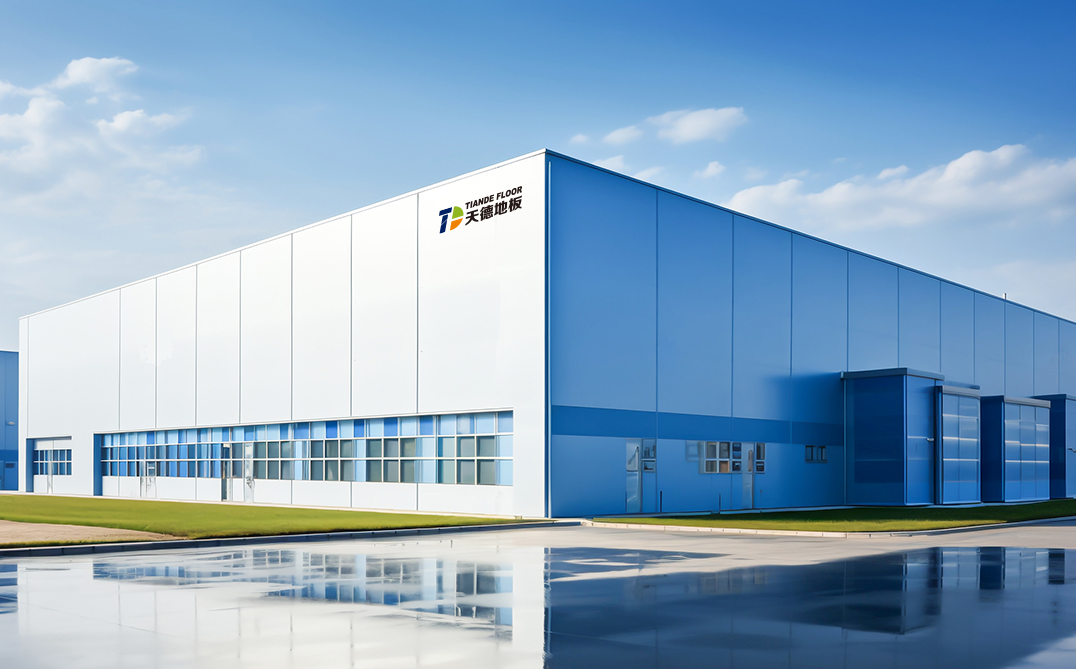
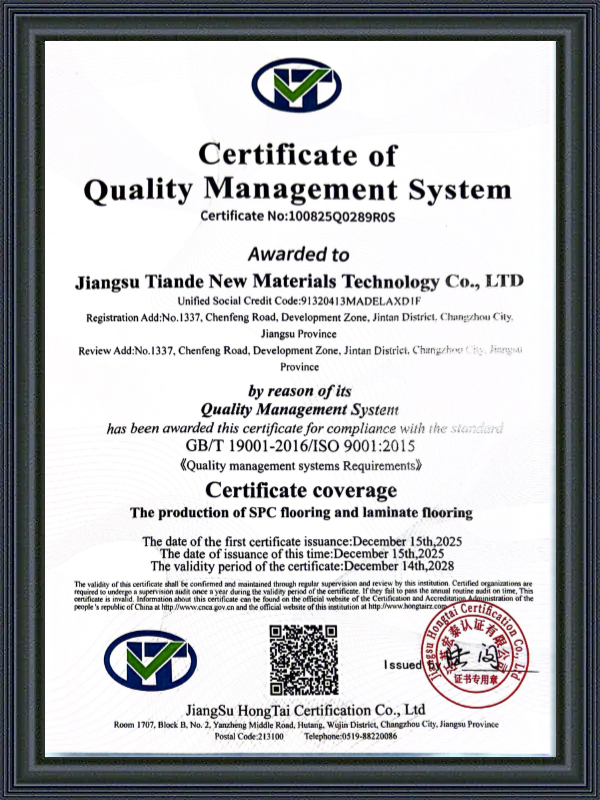
Jiangsu Tiande New Material and Technology Co., Ltd. operates a 46,000 m² facility with automated extrusion lines and over 20 years of flooring industry experience. Their ps skirting range is fully compatible with their SPC and laminate flooring lines, enabling one-stop procurement for global clients. Every batch of polystyrene floor skirting profile undergoes rigorous dimensional and hardness testing, ensuring that the final installed product meets the highest standards of straightness and surface quality—a level of consistency that natural wood simply cannot guarantee due to its organic variability.
Yes. When factoring in initial installation, painting, and periodic repainting over 10 years, ps skirting is approximately 45–60% cheaper than primed wood skirting. The absence of seasonal maintenance and replacement costs further widens the gap.
Absolutely. decorative PS line molding accepts water-based acrylic paints. However, most users prefer the factory-applied white or custom colour finishes offered by Jiangsu Tiande New Material and Technology Co., Ltd., which eliminates field painting entirely.
Exceptionally well. The impact resistance of polystyrene floor skirting profile is comparable to medium-density fibreboard, but without the risk of edge chipping or water damage. Many hospitals and schools now specify PS over wood for its hygienic, seamless surfaces.
Only in niche scenarios where authentic wood grain is mandatory for heritage restoration. For 95% of new constructions and renovations, ps skirting board provides superior cost, durability, and ease of maintenance. Jiangsu Tiande New Material and Technology Co., Ltd. also offers wood-textured PS profiles that visually replicate timber while outperforming it technically.
Final verdict: For cost-conscious, maintenance-savvy projects, ps skirting is unequivocally superior to wood. It delivers predictable performance, reduces labour dependency, and aligns with modern sustainable building practices. With manufacturers like Jiangsu Tiande New Material and Technology Co., Ltd. advancing polymer formulations, the performance gap will only continue to widen in favour of polystyrene-based solutions.


