Acoustic IXPE Foam Underlayment Suppliers
Floors in commercial high-traffic areas face a relentless daily routine: thousands of foot passes, ...
Read More


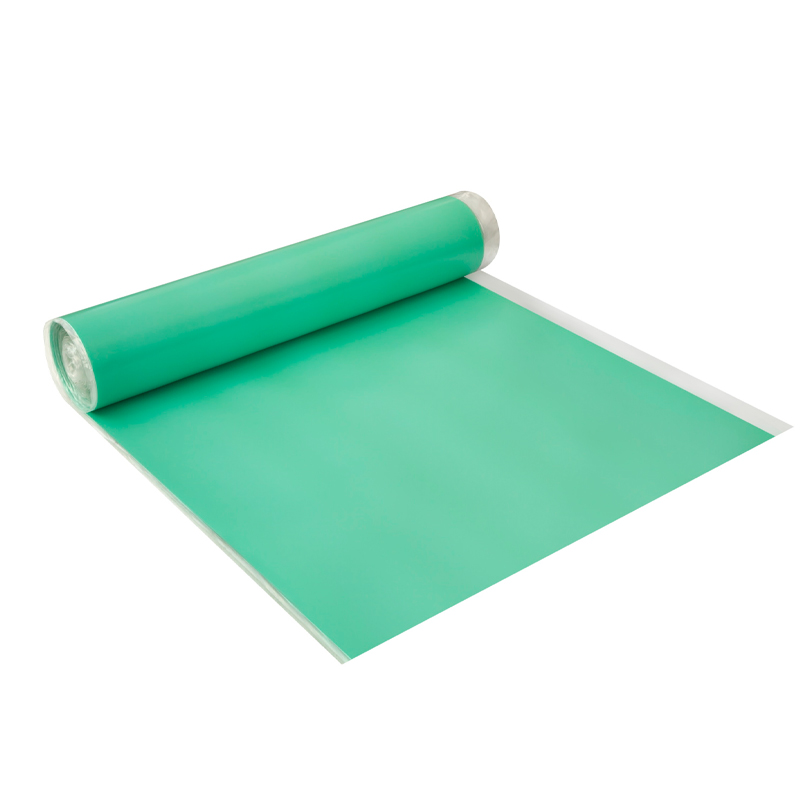
IXPE foam is a product with clean material. Like all foam, it can prevent moisture from the ground, so as to protect the upper flooring. IXPE is VOC-free.


Committed to green and sustainable development, we use high-tech eco-friendly materials to replace natural wood and actively contribute to protecting forest resources and creating a healthier living environment.
Floors in commercial high-traffic areas face a relentless daily routine: thousands of foot passes, ...
Read MoreWalk into any flooring showroom and you will hear "PVC," "vinyl," and "SPC" used almost interchang...
Read MoreWhy Kitchens Demand a Different Approach to Flooring A kitchen floor works harder than almost any o...
Read MoreIn the world of acoustic flooring solutions, material science often determines the difference between a quiet living space and a noisy disappointment. Among the various underlayment options, acoustic IXPE foam has emerged as a preferred choice for laminate and hybrid flooring systems. But what truly sets it apart is its closed-cell structure—a microscopic architectural feature that directly influences sound insulation, moisture resistance, and long-term durability. This article explores the physics behind this structure, its practical benefits for soundproofing, and how different product categories within the closed cell acoustic IXPE foam family address specific flooring challenges.
Before diving into categories, it is essential to understand the base material. Acoustic IXPE foam is a product with clean material. Like all foam, it can prevent moisture from the ground, so as to protect the upper flooring. Importantly, IXPE is VOC-free, making it safe for indoor environments. Its closed-cell nature means each cell is sealed off from its neighbors, creating a barrier that resists air and water penetration—a feature that directly enhances acoustic performance by damping sound waves rather than transmitting them.
This category represents the entry-level solution for residential and light commercial applications. The acoustic IXPE foam underlayment in this grade typically features a density of 25–30 kg/m³ and a thickness of 2 mm. Its closed-cell structure is optimized for impact noise reduction, with a typical lab-tested IIC (Impact Insulation Class) of 58 and STC (Sound Transmission Class) of 65. However, the real-world performance is better measured by Delta IIC (ASTM E2179), which isolates the underlayment’s contribution—usually ranging from 18 to 22 points for this category.
Core technical features include a compression set of less than 5% (ASTM D3575), ensuring the foam rebounds after heavy furniture loads, and a water vapor transmission rate (WVTR) of ≤ 0.02 perms, which qualifies it as a Class I moisture barrier. Typical applications include apartments, condominiums, and office spaces where footfall noise is the primary concern. Unlike felt or rubber, closed cell acoustic IXPE foam does not absorb moisture, preventing mold growth beneath laminate flooring.
This grade is where acoustic IXPE foam for laminate flooring is most frequently used. Its lightweight nature (approx. 150 g/m²) reduces shipping costs, and the VOC-free composition aligns with green building certifications. For projects requiring basic acoustic compliance without premium performance, this category offers a reliable balance of function and value.
Designed for luxury vinyl tile (LVT), engineered wood, and high-traffic commercial spaces, the high-density variant elevates the closed-cell concept to a new performance tier. With densities ranging from 50 to 70 kg/m³ and thicknesses of 3–4 mm, this acoustic IXPE foam underlayment achieves a Delta IIC of 22–26 points and an STC of up to 70 in lab conditions. The finer cell structure—with average pore sizes below 0.2 mm—increases the path length for sound waves, forcing energy dissipation through internal friction.
Key differentiators include a compression set of < 3%, higher tensile strength (≥ 150 kPa), and a smoother surface finish that reduces telegraphing (imprinting of subfloor imperfections through the flooring). This grade is often specified for hotels, gyms, and retail spaces where both impact and airborne noise must be controlled. Moreover, the higher density improves point-load resistance, making it suitable for rolling loads (e.g., office chairs, carts).
| Property | Standard Grade | High-Density Grade |
| Density (kg/m³) | 25–30 | 50–70 |
| Delta IIC (ASTM E2179) | 18–22 | 22–26 |
| Compression Set (%) | < 5 | < 3 |
| Typical Thickness (mm) | 2 | 3–4 |
| Moisture Barrier Class | Class I (≤ 0.02 perms) | Class I (≤ 0.01 perms) |
Closed cell acoustic IXPE foam in this category also exhibits superior dimensional stability, resisting shrinkage or expansion under temperature variations (−40°C to +80°C). This makes it a preferred choice for projects with radiant floor heating, as the closed-cell structure prevents thermal degradation while maintaining acoustic performance.
This specialized category integrates a composite layer—often a non-woven fabric or a high-density polyethylene film—bonded to the IXPE core. The purpose is twofold: improve tear resistance during installation and add a secondary acoustic decoupling layer. The acoustic IXPE foam for laminate flooring in this grade often includes a built-in vapor barrier, eliminating the need for separate plastic sheeting. Typical thickness ranges from 2.5 to 5 mm, with Delta IIC values reaching 28 points when combined with the reinforcing layer.
The reinforced backing also enhances the foam’s ability to bridge subfloor irregularities up to 1.5 mm, reducing the risk of hollow sounds. This category is frequently specified for renovation projects over existing tile or concrete slabs, where moisture and minor leveling issues are common. The composite construction adds mechanical strength, making it less prone to tearing during high-speed roll-out in large-area installations.
Within this category, acoustic IXPE foam is often paired with click-lock laminate systems, where the combined thickness and resilience ensure a snug fit. The closed-cell core remains the primary damping element, while the backing adds structural redundancy. For projects demanding both acoustic excellence and logistical simplicity, this grade provides a turnkey solution.
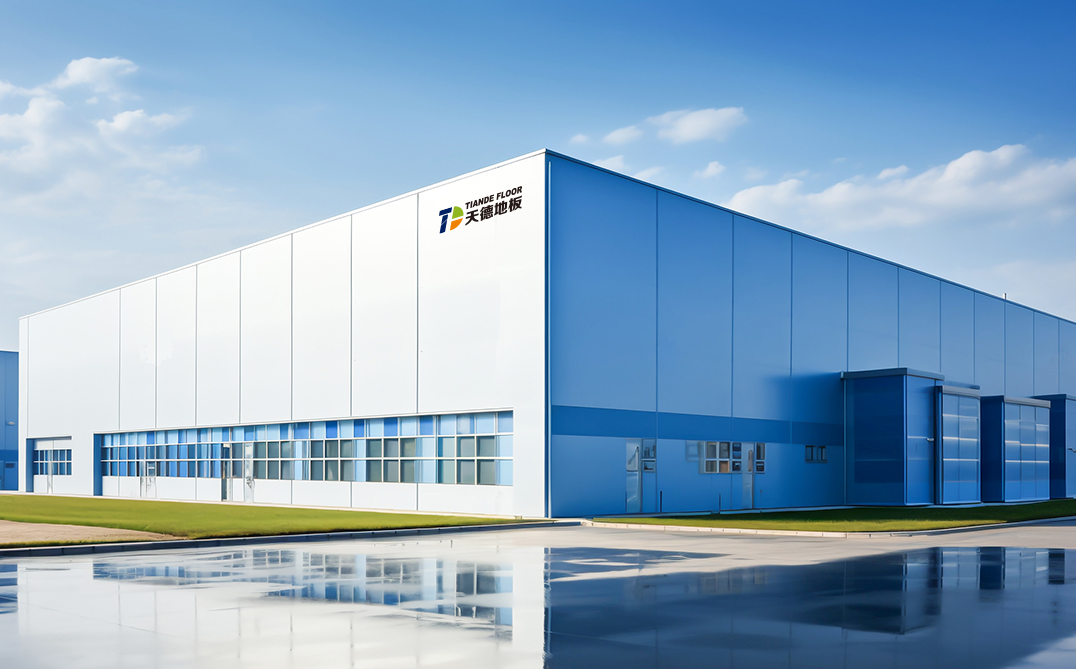
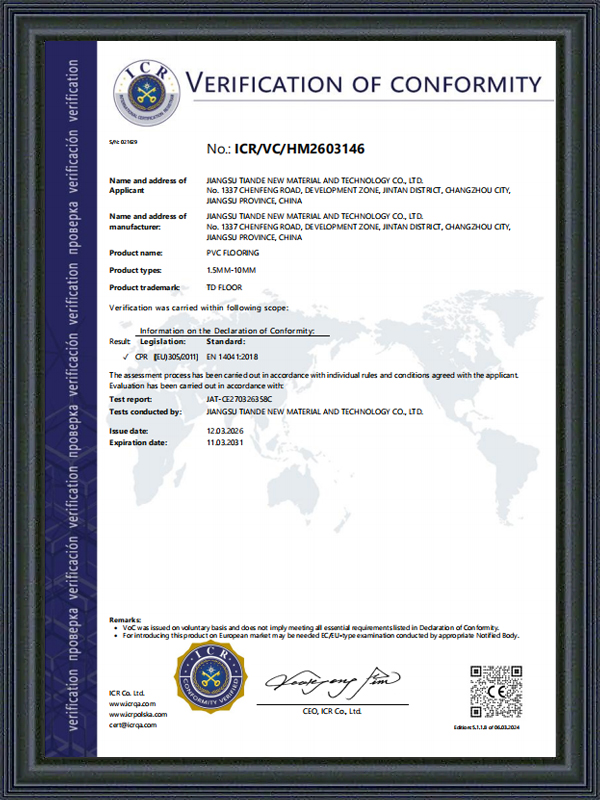
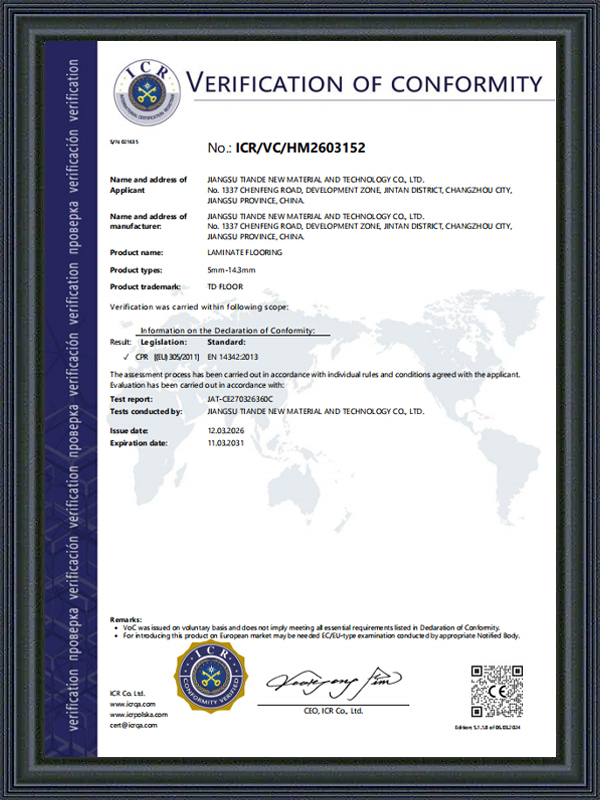
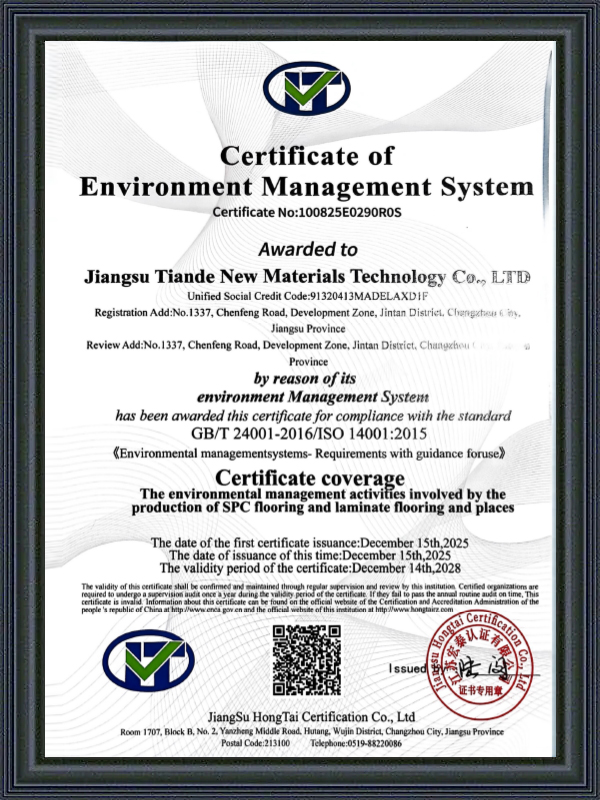
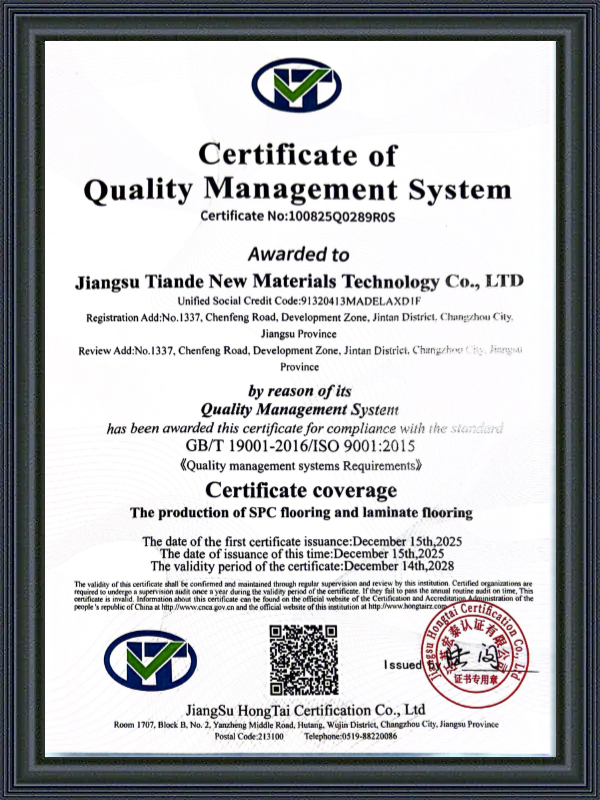
The consistent quality of these categories is underpinned by advanced production processes. Jiangsu Tiande New Material and Technology Co., Ltd. specializes in the manufacturing of SPC flooring and laminate flooring for global markets. The company operates a modern manufacturing facility covering 46,000 square meters, supported by automated production equipment and an experienced professional team. With over 20 years of experience in flooring production and international sales, Jiangsu Tiande New Material and Technology Co., Ltd. ensures stable quality, efficient production, and reliable global supply.
Tiande is committed to providing high-quality, environmentally responsible flooring products, while helping partners streamline procurement and improve market competitiveness through one-stop flooring solutions. The company’s in-house R&D lab tests every batch of closed cell acoustic IXPE foam for density, compression set, and acoustic performance, ensuring that each category meets its specified Delta IIC targets. Furthermore, Jiangsu Tiande New Material and Technology Co., Ltd. offers custom lamination and thickness options, enabling clients to tailor the underlayment to specific project codes.
The vertical integration of foam production and flooring manufacturing allows for tighter quality control and faster turnaround times. This is particularly critical for large-scale developments where consistent acoustic performance across thousands of square meters is non-negotiable. As a result, the company’s acoustic IXPE foam underlayment solutions are trusted by contractors and specifiers in over 30 countries.
The closed-cell structure of IXPE foam creates a matrix of tiny, sealed air pockets. When sound waves—particularly impact noise from footsteps—hit the underlayment, the cells deform elastically, converting mechanical energy into heat through viscoelastic damping. Because the cells are closed, air cannot flow freely through the material, which prevents the transmission of low-frequency vibrations that often pass through open-cell foams. Additionally, the closed-cell nature provides a continuous moisture barrier, protecting the laminate flooring above from subfloor humidity—a common cause of cupping and warping.
Another critical aspect is the material’s VOC-free property. Unlike some rubber or recycled felt underlayments that off-gas volatile compounds, IXPE is VOC-free, ensuring indoor air quality is not compromised. This combination of acoustic effectiveness, moisture protection, and environmental safety makes closed cell acoustic IXPE foam a scientifically superior choice for modern flooring systems.
The primary differences lie in density, compression set, and Delta IIC performance. Standard-grade (25–30 kg/m³) offers a Delta IIC of 18–22 points and is suitable for residential areas. High-density (50–70 kg/m³) achieves 22–26 Delta IIC with better point-load resistance and lower long-term compression, making it ideal for commercial spaces and heavy furniture.
Yes, all grades of acoustic IXPE foam are thermally stable up to 80°C and feature a low thermal resistance (R-value 0.08–0.10), which allows efficient heat transfer. The closed-cell structure prevents moisture accumulation, which could otherwise damage the heating elements. Always consult the manufacturer’s guidelines for maximum temperature limits.
The integrated backing acts as a combined moisture barrier and tear-resistant layer, eliminating the need for separate polyethylene sheets. This reduces installation steps, lowers material waste, and speeds up roll-out—especially in large open-plan areas. It also improves dimensional stability during temperature fluctuations.
Yes, Jiangsu Tiande New Material and Technology Co., Ltd. provides custom lamination and thickness options ranging from 1.5 mm to 6 mm, depending on project requirements. The company’s in-house testing ensures that any custom variant meets the specified Delta IIC and compression set standards, backed by over 20 years of flooring industry expertise.


