English
Tile-Look SPC Flooring vs Real Ceramic Tiles: Weight, Cost and Acoustic Differences
Home > News > Industry News > Tile-Look SPC Flooring vs Real Ceramic Tiles: Weight, Cost and Acoustic Differences

Content
When a floor looks like ceramic tile but installs like a click-lock plank, it deserves a closer look. Tile-look SPC flooring has become one of the most requested rigid-core floors for kitchens, bathrooms, and entryways, and much of its appeal comes from replacing the traditional ceramic tile workflow with something faster and lighter.
This article compares tile-look SPC flooring vs real ceramic tiles across three practical dimensions: weight, installation cost, and acoustic differences. We also add a few surrounding factors that affect daily comfort, because choosing between a mineral-based tile and a polymer composite plank is never just a visual decision.
Ceramic tile is one of the heaviest floor coverings in common use. A standard ceramic or porcelain tile weighs about 18 kg to 25 kg per square meter, depending on thickness and body density. After adding the cement-based adhesive, grout, and sometimes a self-leveling skim coat, a fully installed tile floor can add roughly 25 kg to 35 kg per square meter to the building structure.
Tile-look SPC flooring is built differently. A 5 mm to 6.5 mm rigid SPC core plank weighs approximately 10 kg to 16 kg per square meter, and because it is installed as a floating floor without adhesive, the final dead load is close to the plank weight alone. On a 25 m² kitchen, the difference can exceed 400 kg, which is meaningful for upper-floor renovations, timber subfloors, and buildings with load limits.
| Comparison Point | Tile-Look SPC | Ceramic Tile with Adhesive |
|---|---|---|
| Plank or tile weight per m² | 10-16 kg | 18-25 kg |
| Adhesive and grout weight | None (floating floor) | 5-10 kg per m² |
| Total installed load | 10-16 kg per m² | 25-35 kg per m² |
| Upper-floor suitability | Generally yes | Requires structural check |
For a closer look at the available formats and surface embossings, you can browse the SPC flooring range; the tile-visual series is manufactured with through-color wear layers and synchronized grain texture.
The material price of ceramic tile can be lower than that of a premium SPC plank, but the installed cost tells a different story. In most tile projects, installation labor exceeds the material cost, and the gap is driven by how much manual work each method requires. Market prices vary by region and quality grade, but the relative pattern holds almost everywhere.
A ceramic tile installation includes substrate preparation, notched-trowel adhesive application, tile cutting with a wet saw, spacers and leveling, grouting, curing, and final cleaning. Every step demands skilled labor. Standard practice allows 24 to 48 hours of curing before foot traffic, and grout sealing can add another day.
Tile-look SPC flooring snaps together with a click-lock joint. There is no adhesive, no grout, no curing, and no wet saw. A prepared installer can lay 30 m² to 50 m² of SPC in a day, compared with 10 m² to 20 m² of ceramic tile. In renovation projects, SPC can often be floated directly over a clean, flat subfloor, and in some cases over the existing floor covering, which skips an entire demolition cycle.
| Cost Component | Tile-Look SPC | Ceramic Tile |
|---|---|---|
| Material price per m² | $16-$32 | $12-$60 |
| Installation labor per m² | $8-$18 | $25-$55 |
| Underlayment or adhesive and grout | $2-$6 | $10-$25 |
| Time before the floor is walkable | Immediately | 24-48 hours |
| Removal of old floor | Usually not required | Often required |
Even when you choose a quality acoustic underlayment, the total installed cost almost always favors SPC. The same comparison applies to the finishing stage: where the floor meets a doorway, stairs, or another room, a clean transition strip is needed to complete the installation.
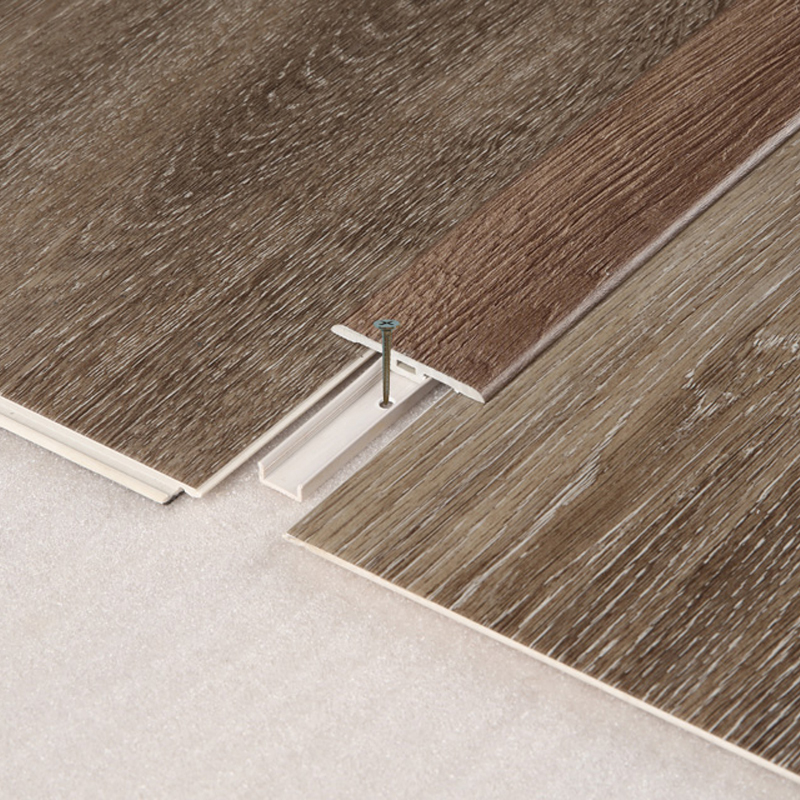 Easy Install SPC T-Moulding Decorative Transition StripThis T-moulding bridges floors of equal height with a rigid, waterproof SPC core and wear-resistant overlay. Its track or adhesive installation speeds up finishing work, making it a practical choice for completing commercial renovations quickly.View Product →
For commercial renovations, every day of closure carries an opportunity cost. A cafe, office, or retail space that can reopen after one weekend instead of two weeks gains a measurable business advantage. SPC click-lock installation shortens the critical path and allows furniture to be moved back in the same day.
Sound performance is where ceramic tile surprises many homeowners. A fired ceramic surface is hard and reflective. Airborne sound such as voices and television audio bounces off the surface, and impact sounds such as footsteps, chairs, and dropped objects transmit almost directly through the mortar bed into the structure below. In a multi-story building, a tiled living room makes the room underneath noticeably noisier.
Tile-look SPC behaves differently. Its rigid core is dense enough to feel stable, but the polymer composition absorbs part of the impact energy. Footsteps sound softer and lower in pitch, and the floating click-lock system creates a slight mechanical decoupling from the subfloor. The improvement is even clearer when the floor is installed over an acoustic underlayment.
In practical terms, a floating SPC floor with a foam underlayment can reduce impact sound transmission noticeably compared with a directly mortar-set ceramic tile floor, while also feeling warmer and quieter underfoot.
| Acoustic Behavior | Tile-Look SPC | Ceramic Tile |
|---|---|---|
| Impact sound transmission | Low to moderate | High |
| Airborne sound reflection | Moderate | High |
| Footfall-generated noise | Soft thud, low pitch | Sharp clack and ringing |
| Improvement with underlayment | Strong | Minimal |
| Multi-story residential use | Recommended with underlayment | Rarely preferred |
For apartment buildings and hotel projects, SPC is usually paired with a dedicated sound-control layer. A 2 mm cork-foam underlayment with a PE vapor barrier is a versatile option: it attenuates impact noise while protecting the planks from subfloor moisture.
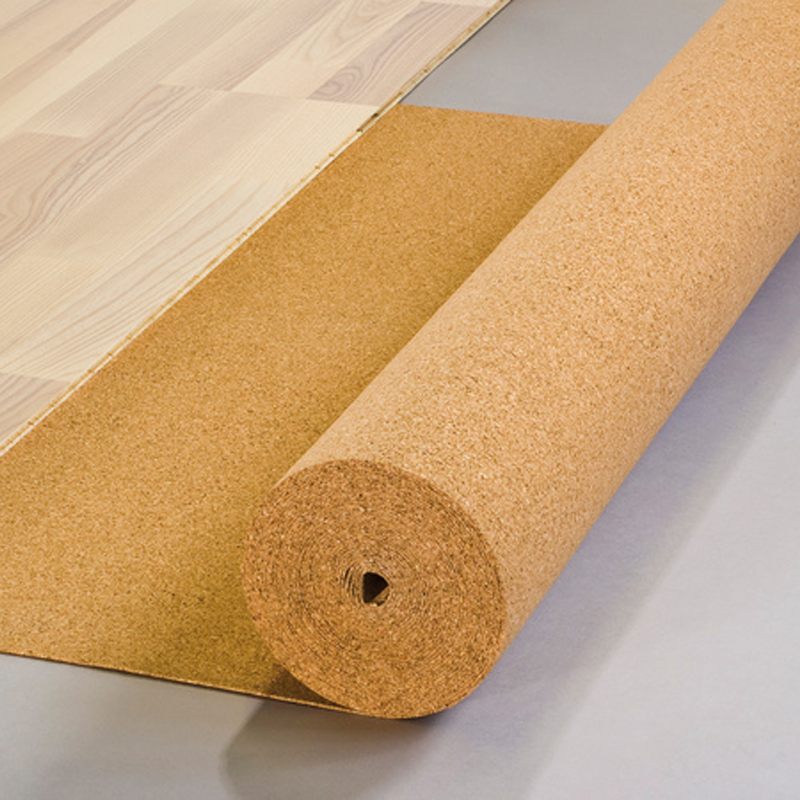 2mm Acoustic Cork Underlay with PE Vapour BarrierCombining natural cork with a PE film, this underlay adds sound absorption, thermal insulation, and moisture protection in one thin layer. It suits apartment and hotel projects where impact noise and subfloor dampness both need addressing without raising floor height.View Product →
Ceramic tile remains a legitimate choice when the project demands extreme scratch resistance, a mortar-stiff surface, or a completely seamless resin-grouted look, and for outdoor areas where non-porous stone is irreplaceable. For indoor living spaces, tile-look SPC flooring consistently wins on practical day-to-day priorities: light weight, lower installed cost, faster schedules, warmer comfort, and quieter rooms.
Both surfaces tolerate water well. Ceramic tile itself is waterproof, but its grout lines are permeable and need periodic sealing; stained grout is one of the most common complaints in tiled kitchens. Tile-look SPC has a 100% waterproof rigid core that does not swell in humid conditions. Daily maintenance is limited to sweeping and mopping, with no grout lines to scrub.
Ceramic tile feels cold immediately after installation and stays cold in winter, often pushing homeowners toward radiant heating. SPC is a polymer composite with lower thermal conductivity, so it feels noticeably warmer under bare feet, and select SPC series can be combined with underfloor heating systems.
Modern digital printing allows tile-look SPC to reproduce the texture of limestone, slate, cement, and porcelain, complete with embossed grout lines. Because planks are printed in a continuous roll, the pattern repeats naturally and avoids the maintenance of thin mortar joints that can crack and collect dirt.
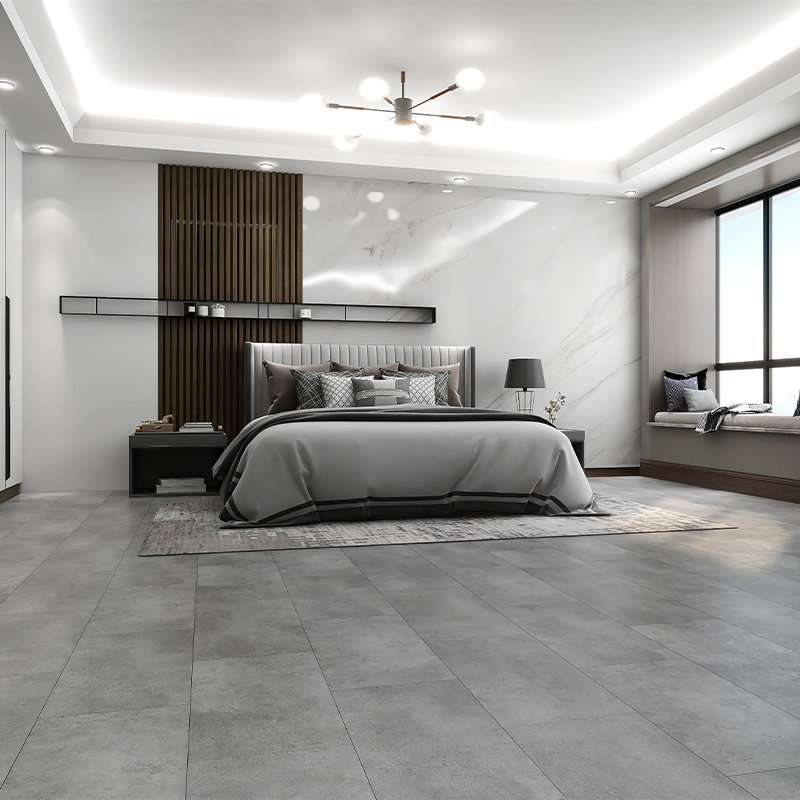
For kitchens, living rooms, and light commercial settings, the tile-look SPC series in our production line offers structured stone surfaces in realistic plank formats, including options designed for high-traffic areas.
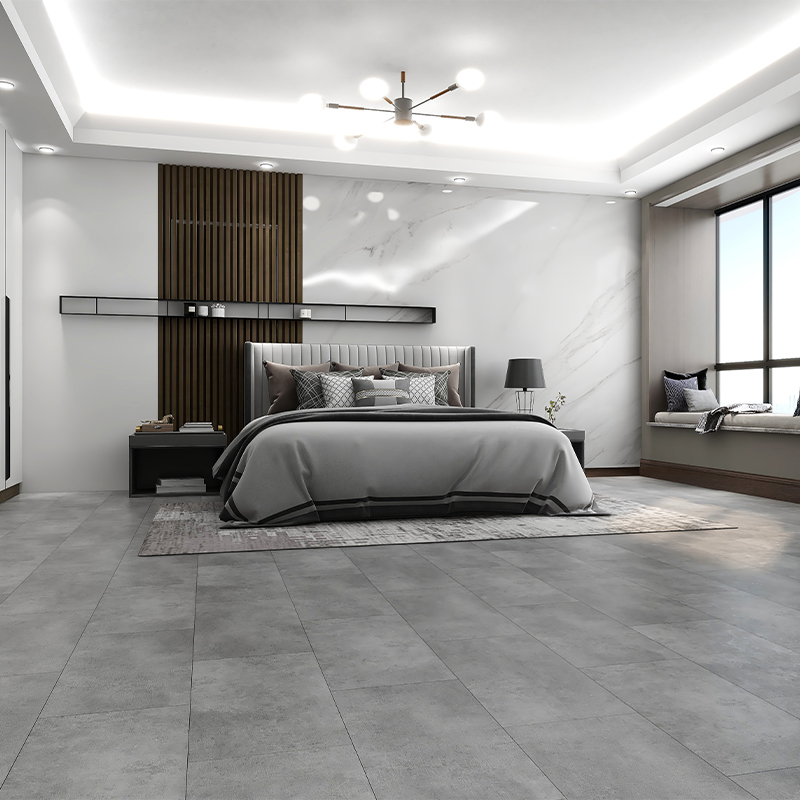 Tile Look SPC Flooring for Living Room and KitchenThis rigid SPC plank mimics ceramic tile while remaining 100% waterproof, fire-rated Bfl-s1, and easy to install with tongue-and-groove joints. It offers a durable, low-maintenance surface suitable for kitchens, living rooms, and light commercial high-traffic areas.View Product →
If you are planning a project and need samples, technical datasheets, or a quotation, contact our team and we will help you compare the right specifications for your market and installation conditions.
Yes. SPC is heavier than flexible plastic vinyl because of its mineral-filled rigid core, but it is still far lighter than ceramic tile. A typical 5 mm SPC plank weighs about 12 kg per square meter, whereas an installed ceramic floor system including adhesive and grout can reach 30 kg per square meter.
In many cases, yes. If the existing tiles are tightly bonded, flat enough, and clean, SPC click-lock planks can be floated over them with an underlayment. This avoids demolition, reduces disposal cost, and adds minimal height to the finished floor.
SPC already absorbs more impact sound than ceramic tile, but for shared walls and multi-story buildings a separate acoustic underlayment is strongly recommended. Some SPC products include a pre-attached IXPE pad; a thicker dedicated underlayment delivers even better sound results.
The main reason is labor. Ceramic tile requires a skilled tiler for preparation, cutting, adhesive setting, grouting, and curing, and every step is slow. SPC installation uses a simple click-lock system, which shortens project time and reduces labor cost per square meter.
Visually, modern tile-look SPC with embossed grout lines is very close to ceramic. Underfoot, it feels warmer and slightly more flexible. Most homeowners experience that difference as a comfort advantage rather than a drawback.