Long Plank Style Laminate Flooring Suppliers
Floors in commercial high-traffic areas face a relentless daily routine: thousands of foot passes, ...
Read More


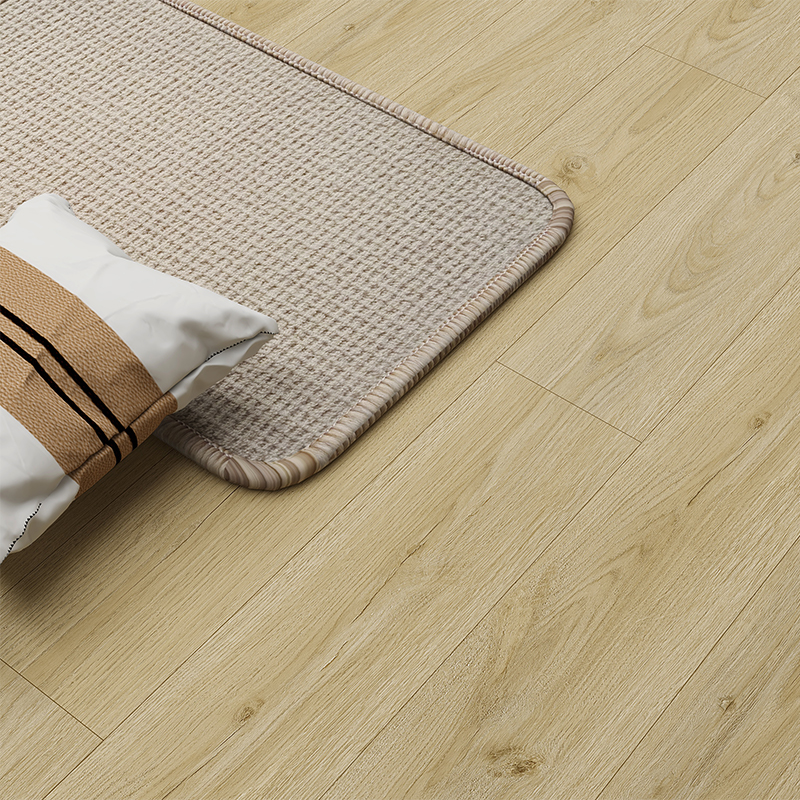
Laminate flooring plank style is the traditional style for laminate flooring. It has authentic wood texture looking and feeling, is a perfect product replacement for solid wood flooring. The stable dimensions and easy installation make it a budget-friendly product for young people's first choice in flooring material. With an 18% swelling rate, it is suitable for dry spaces such as offices, bedrooms, and living rooms.


Committed to green and sustainable development, we use high-tech eco-friendly materials to replace natural wood and actively contribute to protecting forest resources and creating a healthier living environment.
Floors in commercial high-traffic areas face a relentless daily routine: thousands of foot passes, ...
Read MoreWalk into any flooring showroom and you will hear "PVC," "vinyl," and "SPC" used almost interchang...
Read MoreWhy Kitchens Demand a Different Approach to Flooring A kitchen floor works harder than almost any o...
Read MoreProper acclimation is one of the most critical yet frequently overlooked steps in any laminate flooring project. Before you lay a single board, you must allow the material to adjust to the temperature and relative humidity of the installation environment. This process prevents unsightly gaps, buckling, or stress fractures after installation. When dealing with plank style laminate flooring, the acclimation procedure is especially important because the dimensional stability of each board directly affects the overall flatness and longevity of the floor. Even premium wide plank style laminate flooring or long plank style laminate flooring can fail prematurely if acclimated improperly. For a comprehensive overview of product options, visit our dedicated plank style laminate flooring collection page. This article provides a detailed, step‑by‑step guide to acclimating laminate planks, covering everything from on‑site conditions to measuring moisture content, while also explaining why this process matters for different product families.
Acclimation is not merely a suggestion; it is a technical requirement rooted in the hygroscopic nature of wood‑based core materials. Most laminate planks consist of a high‑density fiberboard (HDF) core, which absorbs or releases moisture until it reaches equilibrium with the surrounding air. For wood look plank style laminate flooring, this equilibrium is vital because the decorative paper and embossed texture can magnify even minor dimensional changes. The industry standard recommends leaving unopened cartons in the installation room for at least 48 hours, but the exact duration depends on the plank type, the season, and the subfloor condition. A critical rule is to maintain the room temperature between 18°C and 24°C (65°F to 75°F) and relative humidity between 35% and 65% throughout the acclimation period. Failing to meet these parameters can lead to swelling rates exceeding the typical 18% threshold, which is particularly risky for standard laminate products used in dry spaces.
Before unpacking, always check the subfloor moisture content using a concrete moisture meter or a pin‑type wood meter. The subfloor should not exceed 2.5% moisture for cement screeds (measured with a carbide method) or 10% for wooden subfloors. If the subfloor is too damp, install a vapor barrier – a 6‑mil polyethylene sheet is often sufficient. Remember that acclimation begins only after the subfloor passes the moisture test; otherwise, you are simply wasting time. For large projects spanning multiple rooms, consider leaving the planks in their original packaging but slit the shrink‑wrap to allow air circulation, while keeping the boxes stacked horizontally to prevent warping.
Not all laminate planks behave identically during acclimation. The core density, plank width, length, and surface coating all influence how quickly moisture equilibrium is achieved. Below we examine three distinct product families, each representing a major segment of the market, and outline their specific acclimation requirements, performance characteristics, and typical installation scenarios.
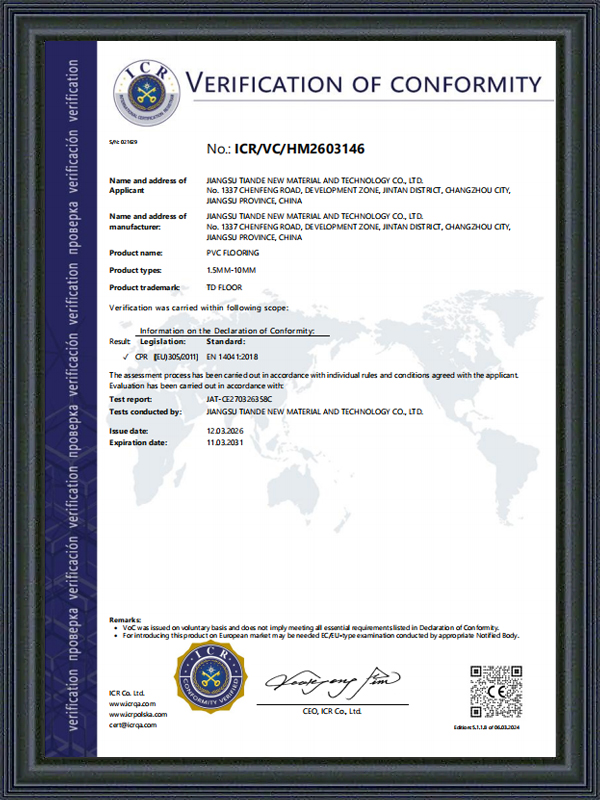
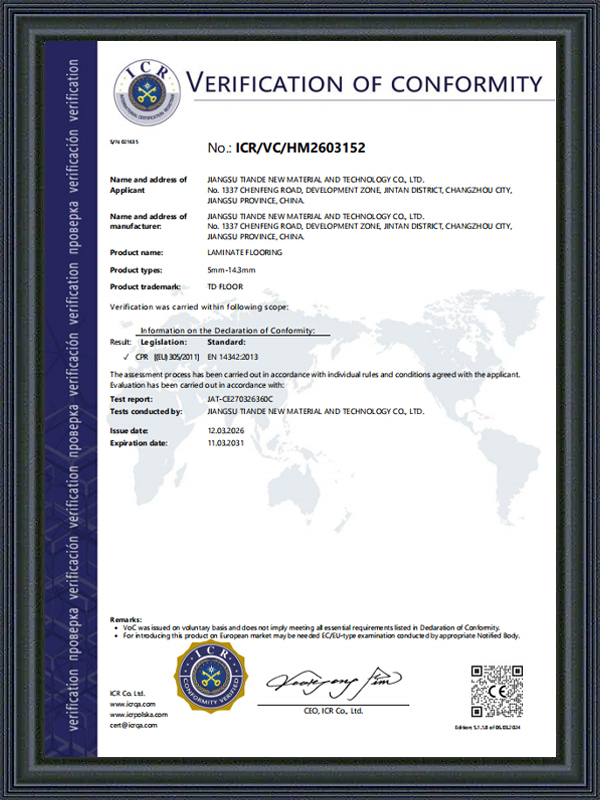
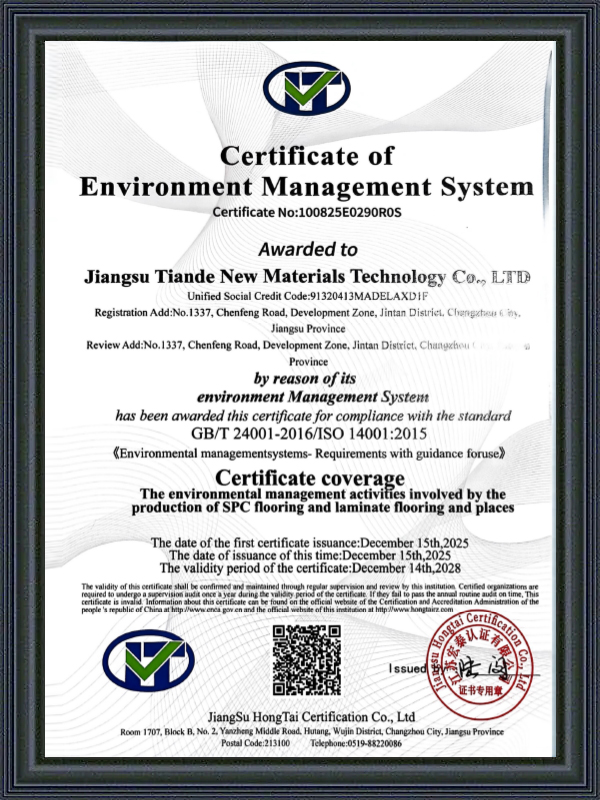
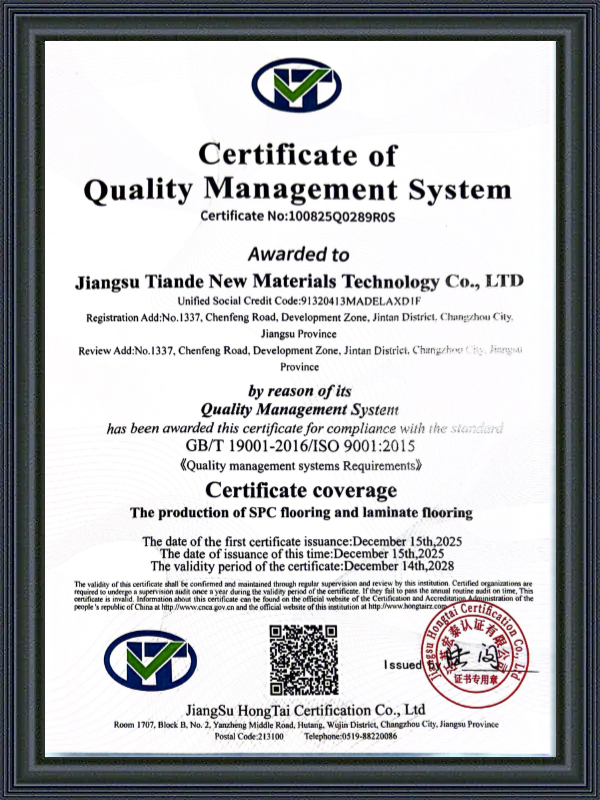
Plank style laminate flooring in its classic format typically features planks that are 7‑9 mm thick, with widths ranging from 150 mm to 195 mm and lengths up to 1.3 meters. This category includes the most popular entry‑level and mid‑range products. The acclimation period for these planks is usually 48 to 72 hours, but we recommend a full 72 hours for projects in coastal or high‑humidity areas. Because the core is relatively thinner than premium grades, these planks react faster to humidity changes, so it is essential to keep the cartons away from exterior walls, windows, or HVAC vents during acclimation. The typical swelling rate for this class is around 18%, making it suitable for dry spaces such as offices, bedrooms, and living rooms – exactly as described in the product introduction from Jiangsu Tiande New Material and Technology Co., Ltd.
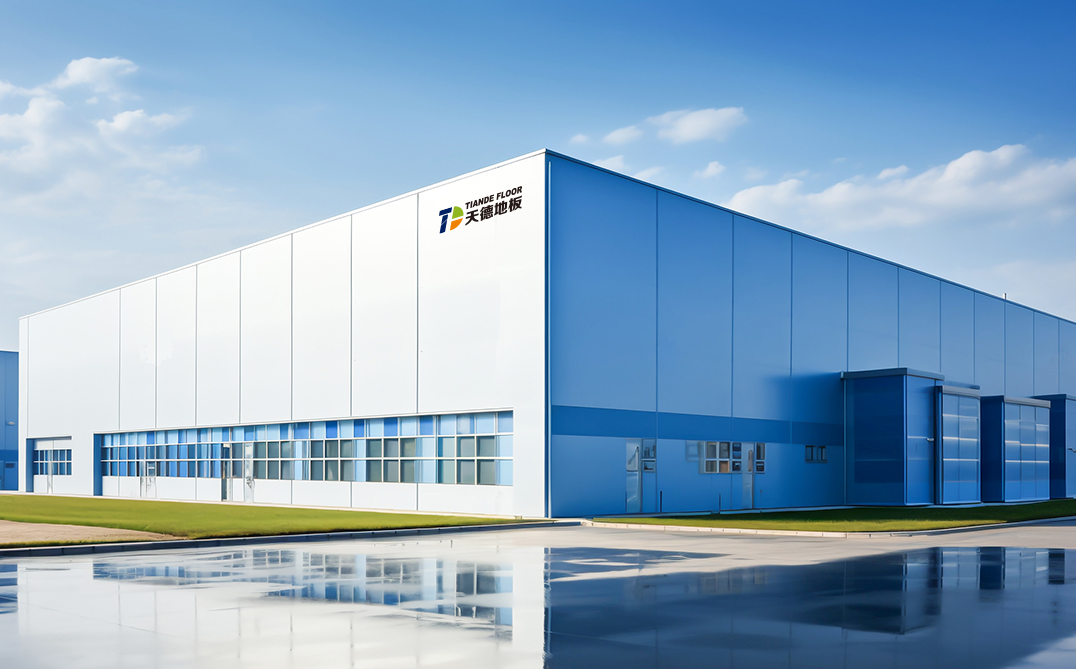
Jiangsu Tiande New Material and Technology Co., Ltd. produces this category with a balanced HDF core that meets EN 13329 standards. Their manufacturing facility, spanning 46,000 square meters, employs automated climate‑controlled storage to pre‑condition planks before packaging, which significantly reduces on‑site acclimation time. However, even with factory pre‑conditioning, end‑users must still follow the 48‑hour minimum rule to account for local micro‑climates.
Wide plank style laminate flooring typically measures 240 mm to 300 mm in width, creating a luxurious, expansive look. However, wider boards are more susceptible to cupping and crowning because the cross‑sectional area is larger, allowing more moisture exchange. For this product family, we strongly recommend a minimum acclimation period of 72 hours, and up to 96 hours in winter when heating systems reduce indoor humidity below 30%. The core density is usually higher (often 850‑900 kg/m³) to counteract the increased width, but this also means the planks need more time to equalize. Always stack wide planks in a staggered criss‑cross pattern with spacers between layers to ensure air reaches every surface, including the tongue and groove edges.
A common mistake is to assume that wider planks are more stable – in reality, they expand and contract more linearly across the width. This makes proper expansion gaps (at least 12‑15 mm along perimeter walls) absolutely mandatory. Jiangsu Tiande New Material and Technology Co., Ltd. recommends using a moisture barrier underlayment with an integrated vapor retarder for these planks, especially when installing over concrete. Their production line for wide boards includes an extra densification step, which reduces the typical 18% swelling rate to approximately 15% for this specific line, but acclimation remains non‑negotiable.
Wide plank products are ideal for open‑plan living areas, large lobbies, and commercial showrooms where the visual impact outweighs the extra handling care. Their bold grain patterns, often mimicking oak or walnut, require the planks to be fully stabilized to avoid unsightly gaps that would otherwise ruin the seamless aesthetic.
Long plank style laminate flooring – often exceeding 1.8 meters in length – creates a streamlined, contemporary feel. Combined with wood look plank style laminate flooring, which features deep embossing and authentic grain reproduction, this category represents the premium tier. The extended length introduces a unique challenge: longitudinal expansion can be significant, so acclimation must account for both width and length changes. We advise a 72‑hour minimum with the planks laid flat in a single layer (not stacked) if space permits, because stacking long boards can cause bowing over time. The room should be fully enclosed with all windows and doors closed to stabilize the environment.
For these long boards, the subfloor flatness becomes even more critical – any deviation greater than 2 mm over a 2‑meter straightedge will cause hollow sounds and possible joint failure. We recommend a self‑leveling compound before acclimation to ensure the subfloor is perfectly flat, allowing the planks to rest evenly. Jiangsu Tiande New Material and Technology Co., Ltd. has developed a proprietary moisture‑buffering layer on the back of these long planks, which actively moderates humidity exchange during the first 48 hours. This innovation, combined with their 20+ years of manufacturing expertise, reduces the risk of edge‑swelling even if the acclimation period is slightly shortened – but they still insist on the full protocol for warranty validation.
Wood‑look variants are especially popular in residential renovations where owners desire the warmth of timber without the maintenance. Because the decorative layer is highly detailed, any minor expansion gap (or lack thereof) becomes visibly distracting. Thus, careful acclimation is not just a technicality – it is a visual quality assurance step.
| Plank Style | Recommended Acclimation | Core Density (kg/m³) | Swelling Rate (typical) | Ideal Spaces |
| Standard Plank | 48‑72 hrs | 780‑820 | ~18% | Bedrooms, Offices |
| Wide Plank | 72‑96 hrs | 850‑900 | ~15% (enhanced) | Living rooms, Lobbies |
| Long Plank / Wood Look | 72 hrs (flat, single layer) | 860‑910 | ~14‑16% | Open plan, Renovations |
To synthesize the guidelines above, here is a consolidated, step‑by‑step procedure that works for all plank style laminate flooring variants, whether standard, wide, long, or wood‑look. This workflow is used by professional installers and is also recommended by Jiangsu Tiande New Material and Technology Co., Ltd. for their global clientele.
Remember that installation should begin immediately after acclimation – leaving acclimated planks in a changing environment for several more days can reverse the process. Plan your installation schedule so that the flooring is laid within 24 hours of completing acclimation.
Acclimation is not about convenience; it is about physics and warranty. When you install a plank that is 2% wetter than the room’s equilibrium, it will shrink after installation, creating visible gaps between boards. Conversely, a plank that is too dry will expand and buckle against walls or transitions. For wide plank style laminate flooring and long plank style laminate flooring, these movements are magnified because the surface area is larger. The 18% swelling rate commonly quoted for standard laminate is a laboratory value under extreme soaking – in real life, even 2‑3% moisture variation can cause significant dimensional shifts. Therefore, the 48‑72 hour acclimation period is a conservative, scientifically validated buffer that protects both the product and the installer’s reputation.
Jiangsu Tiande New Material and Technology Co., Ltd. incorporates acclimation instructions into every product carton, and their technical team offers remote support for large‑scale projects. With over two decades of experience, they have observed that proper acclimation reduces post‑installation claims by over 40%. Their modern 46,000‑m² facility produces planks with consistent density profiles, which minimizes variability – but they still emphasize that on‑site conditions ultimately dictate the success of the floor.
No. Even though manufacturers like Jiangsu Tiande New Material and Technology Co., Ltd. pre‑condition boards in climate‑controlled warehouses, the transportation and storage conditions at your site are different. Pre‑conditioning reduces the required acclimation time but does not eliminate it. Always perform the full acclimation protocol to ensure the planks match your room’s specific microclimate.
The risk of post‑installation gapping or buckling increases substantially. Wide planks have a larger cross‑section, so uneven moisture distribution causes differential expansion. You may notice slight crowning at the joints within a few weeks, which often requires remedial sanding or even full replacement. Always respect the 72‑hour minimum for wide boards.
Yes. Concrete subfloors generally retain more moisture and may require an additional 24 hours of acclimation for the planks to stabilize, especially if a vapor barrier is not used. Wooden subfloors tend to equilibrate faster, but you must still verify moisture content matches the planks. For either case, use a moisture meter to confirm readiness rather than relying solely on time.
The 18% swelling rate is a maximum value under saturated conditions, but during normal humidity fluctuations, the actual expansion is much lower (around 1‑2%). Acclimation ensures that the planks start at the midpoint of their moisture range, so they can expand or contract slightly without exceeding the 18% threshold, which would cause irreversible damage. For plank style laminate flooring, proper acclimation keeps the planks within their safe operational window.
No. Rapid, uneven heating can cause the planks to dry out too quickly on the surface while the core remains moist, leading to surface cracks and delamination. Always use ambient, gentle heating or cooling to reach the target temperature range gradually.
Final note: Acclimating plank style laminate flooring is not an optional extra – it is a fundamental requirement for a durable, beautiful floor. Whether you choose standard, wide, long, or wood‑look variants, invest the time upfront to avoid costly fixes later. With the right preparation and the support of experienced manufacturers like Jiangsu Tiande New Material and Technology Co., Ltd., your laminate floor will deliver decades of reliable service.


