Easy Install DIY Self-Adhesive PVC Flooring Suppliers
Floors in commercial high-traffic areas face a relentless daily routine: thousands of foot passes, ...
Read More


Self-adhesive flooring is an advanced dry-back flooring. This product is pre-glued on the back; the user just needs to peel off the plastic paper and glue the flooring to the ground directly. No need to use extra glue.


Committed to green and sustainable development, we use high-tech eco-friendly materials to replace natural wood and actively contribute to protecting forest resources and creating a healthier living environment.
Floors in commercial high-traffic areas face a relentless daily routine: thousands of foot passes, ...
Read MoreWalk into any flooring showroom and you will hear "PVC," "vinyl," and "SPC" used almost interchang...
Read MoreWhy Kitchens Demand a Different Approach to Flooring A kitchen floor works harder than almost any o...
Read MoreModern interior flooring has evolved significantly, and among the most practical innovations is self-adhesive PVC flooring. Often referred to as peel and stick PVC flooring, this product offers a straightforward installation process that eliminates the need for wet adhesives or specialized labor. But what exactly lies beneath its surface? This article examines the material composition, manufacturing layers, and performance characteristics of self-adhesive PVC flooring, while also exploring its primary product classifications, technical specifications, and real-world applications. We will also discuss how easy install DIY self-adhesive PVC flooring has become a preferred choice for both residential renovations and commercial fit-outs, and how manufacturers like Jiangsu Tiande New Material and Technology Co., Ltd. ensure consistent quality across global supply chains.
At its core, self-adhesive PVC flooring is an advanced dry-back flooring solution. The product is pre-glued on the back; the user just needs to peel off the plastic paper and glue the flooring to the ground directly. No need to use extra glue. This design philosophy directly influences the material selection, backing composition, and surface engineering, which we will break down by product category. Understanding these layers helps buyers, contractors, and facility managers make informed decisions about where and how to install self-adhesive PVC flooring for optimal durability and aesthetic longevity.
Before diving into product sub-categories, it is essential to understand the standard build-up of self-adhesive PVC flooring. Most products consist of four primary layers: a UV-cured wear layer, a decorative printed film, a high-density PVC substrate (often with limestone filler for dimensional stability), and a pressure-sensitive acrylic adhesive layer protected by a silicone-coated release liner. The adhesive layer is the defining feature — it is engineered to provide immediate tack while allowing minor repositioning during installation. This construction is shared across most peel and stick PVC flooring variants, but the thickness, density, and backing formulation differ significantly by intended use.
To serve diverse environments, self-adhesive PVC flooring is manufactured in three main series: Standard Residential Series, Heavy-Duty Commercial Series, and Kitchen & Wet Area Series. Each classification differs in wear layer thickness, backing density, adhesive strength, and dimensional stability. Below, we examine each category in detail.
This category represents the most common entry point for easy install DIY self-adhesive PVC flooring. It typically features a wear layer of 0.15–0.20 mm, a printed film with high-definition wood or stone patterns, and a flexible PVC substrate with a thickness of 1.5–2.0 mm. The adhesive is formulated for indoor temperatures between 18°C and 30°C and adheres well to smooth, dry subfloors such as plywood, existing vinyl, or leveled concrete. The primary technical advantage is the balance between cost, ease of cutting with a utility knife, and sufficient resistance to foot traffic in bedrooms, living rooms, and hallways.
For this series, Jiangsu Tiande New Material and Technology Co., Ltd. offers a range of designs with embossed-in-register textures that mimic natural materials. The company's 20+ years of production experience ensure that the PVC substrate remains dimensionally stable under normal humidity fluctuations, reducing the risk of edge curling — a common issue with lower-grade peel and stick PVC flooring. Typical applications include rental apartment upgrades, home office conversions, and temporary event spaces where fast turnover is valued.
Designed for retail stores, office corridors, and public lobbies, this series upgrades the material matrix significantly. The wear layer is increased to 0.30–0.50 mm, and the PVC substrate incorporates a glass-fiber interlayer for tensile strength and reduced thermal expansion. The thickness ranges from 2.5 mm to 3.2 mm, and the adhesive system uses a high-tack acrylic that bonds aggressively to mineral subfloors. Unlike the residential variant, this self-adhesive PVC flooring often includes a built-in antimicrobial additive to resist mold and bacterial growth — a crucial feature for healthcare and educational facilities.
From a manufacturing perspective, Jiangsu Tiande New Material and Technology Co., Ltd. produces this series using automated calendering lines that ensure uniform thickness across large rolls. The company's 46,000-square-meter facility supports continuous production, and their quality control protocols include peel adhesion testing at 23°C and 50% RH, simulating real-world installation conditions. For projects requiring easy install DIY self-adhesive PVC flooring in commercial settings, this series offers the peace of mind that comes with certified slip resistance (R9–R10) and excellent indentation recovery, even under heavy furniture or shelving units.
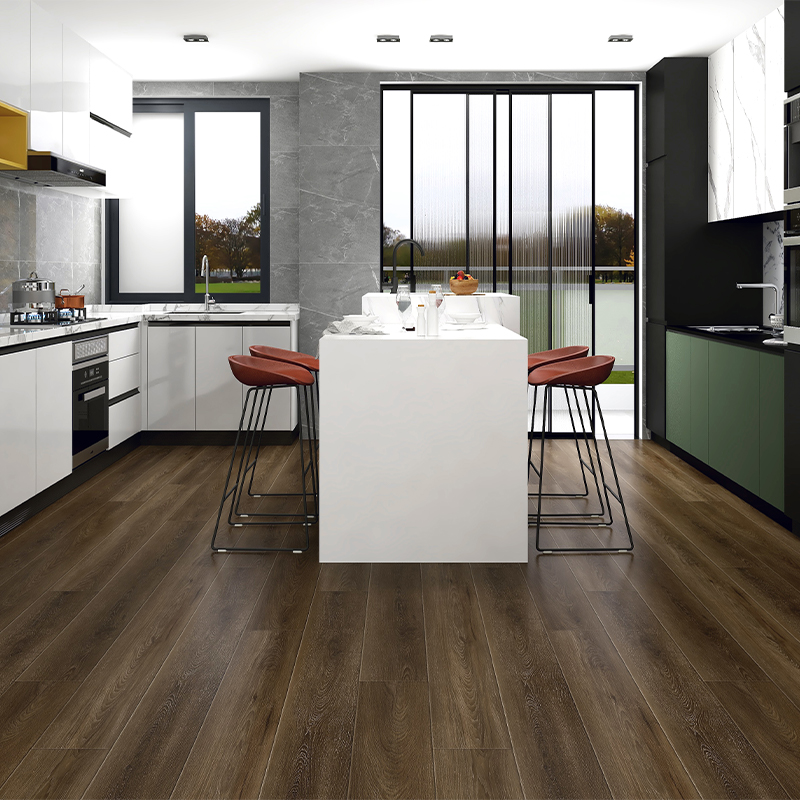
One of the most requested variants is self-adhesive PVC flooring for kitchen environments, where spills, grease, and frequent mopping are routine. This series features a fully waterproof PVC core (zero wood content) with a closed-cell backing that prevents moisture wicking. The wear layer is typically 0.20–0.25 mm but is coated with a UV-cured polyurethane finish that resists staining from cooking oils and acidic foods. Crucially, the adhesive is formulated with a moisture-barrier property, allowing installation over slightly damp subfloors (up to 2.5% moisture content in concrete) without delamination.
Jiangsu Tiande New Material and Technology Co., Ltd. has developed a specialized backing for this series that includes a thin aluminum oxide layer, enhancing abrasion resistance without compromising flexibility. For homeowners and designers, self-adhesive PVC flooring for kitchen areas also offers thermal insulation underfoot, which is a tangible benefit over ceramic or stone. The company's global supply chain ensures that this product meets both EN 13329 (abrasion) and ISO 23999 (dimensional stability) standards, making it a reliable choice for both new builds and renovation projects. Additionally, this series supports easy install DIY self-adhesive PVC flooring practices because the planks are pre-cut to 914 mm × 152 mm sizes, allowing for straightforward herringbone or staggered layouts without specialized tools.
| Feature / Series | Residential | Commercial Heavy-Duty | Kitchen & Wet Area |
| Wear layer thickness | 0.15 – 0.20 mm | 0.30 – 0.50 mm | 0.20 – 0.25 mm (with PU coating) |
| Total thickness | 1.8 – 2.0 mm | 2.5 – 3.2 mm | 2.0 – 2.2 mm |
| Adhesive peel strength (N/25mm) | ≥ 25 | ≥ 40 | ≥ 35 (moisture-resistant) |
| Subfloor moisture tolerance | ≤ 2.0% (concrete) | ≤ 2.5% | ≤ 2.8% (with barrier adhesive) |
| Recommended traffic level | Light – medium | Heavy (continuous footfall) | Medium – heavy (with spills) |
| Typical warranty (years) | 5 – 7 | 10 – 15 | 8 – 10 |
The consistent performance of self-adhesive PVC flooring depends heavily on raw material sourcing and production discipline. Jiangsu Tiande New Material and Technology Co., Ltd. operates a vertically integrated facility where PVC resin, plasticizers, stabilizers, and calcium carbonate are compounded in-house. This control allows the company to fine-tune the gelation temperature and fusion degree, which directly affect the product's flexibility and indent resistance. Their facility spans 46,000 square meters and includes automated mixers, four-roll calenders, and inline thickness gauges that monitor every meter of production.
For international buyers, Jiangsu Tiande New Material and Technology Co., Ltd. offers private labeling and customized packaging while maintaining strict adherence to REACH and CARB Phase 2 emission standards. This commitment to environmental responsibility ensures that even easy install DIY self-adhesive PVC flooring products are low in volatile organic compounds, making them suitable for occupied spaces during installation. The company's 20-year track record in flooring exports also guarantees that each batch of peel and stick PVC flooring undergoes accelerated aging tests, simulating 10 years of UV exposure and thermal cycling, so that the color and adhesion remain intact over the product's service life.
While easy install DIY self-adhesive PVC flooring is marketed as a homeowner-friendly product, professional results require attention to subfloor flatness, cleaning, and rolling pressure. The general sequence involves: (1) subfloor leveling to within 3 mm over 2 meters, (2) vacuuming and priming highly porous surfaces, (3) dry-laying the tiles to plan the layout, (4) peeling the release liner and placing the tile with firm hand pressure, and (5) using a hand roller to ensure 100% adhesive transfer. For self-adhesive PVC flooring for kitchen installations, additional seam sealing with a compatible acrylic sealer is recommended to prevent liquid penetration at joints.
The primary differences lie in wear layer thickness, substrate density, and adhesive peel strength. The Commercial series has a thicker wear layer (0.30–0.50 mm vs. 0.15–0.20 mm) and a glass-fiber reinforced core, which provides higher indentation resistance and dimensional stability under heavy rolling loads. The adhesive in the Commercial series also offers higher initial tack and longer open time, making it suitable for large-format installations.
Yes, provided the tile surface is clean, flat, and free of wax or sealers. For self-adhesive PVC flooring for kitchen or other wet areas, it is advisable to fill grout lines with a leveling compound to prevent telegraphing. Most manufacturers, including Jiangsu Tiande New Material and Technology Co., Ltd., recommend using a primer on non-porous surfaces to enhance adhesion.
Only electric radiant systems with surface temperatures not exceeding 27°C are compatible. The self-adhesive PVC flooring must be acclimatized and installed with a thermal barrier (e.g., 2-mm foam underlayment) to distribute heat evenly. Always consult the technical data sheet; thick commercial grades with fiberglass interlayers are generally more stable under thermal cycling.
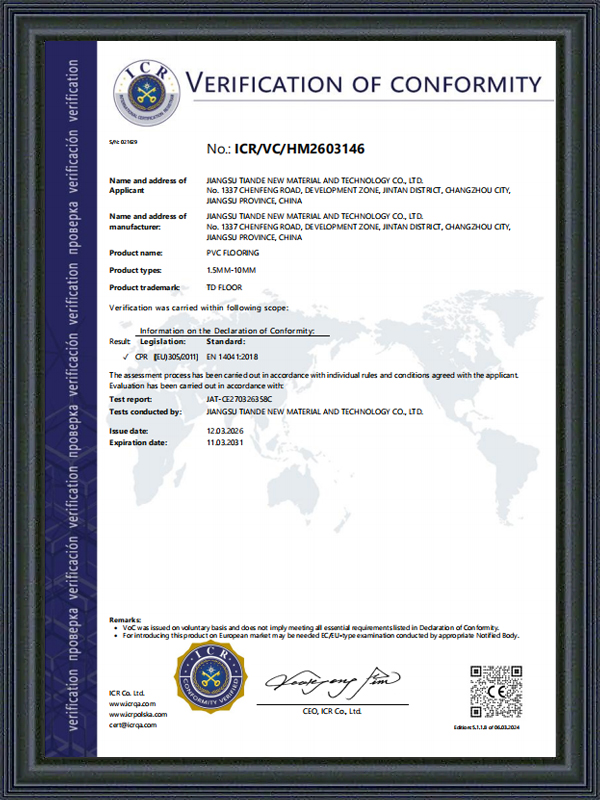
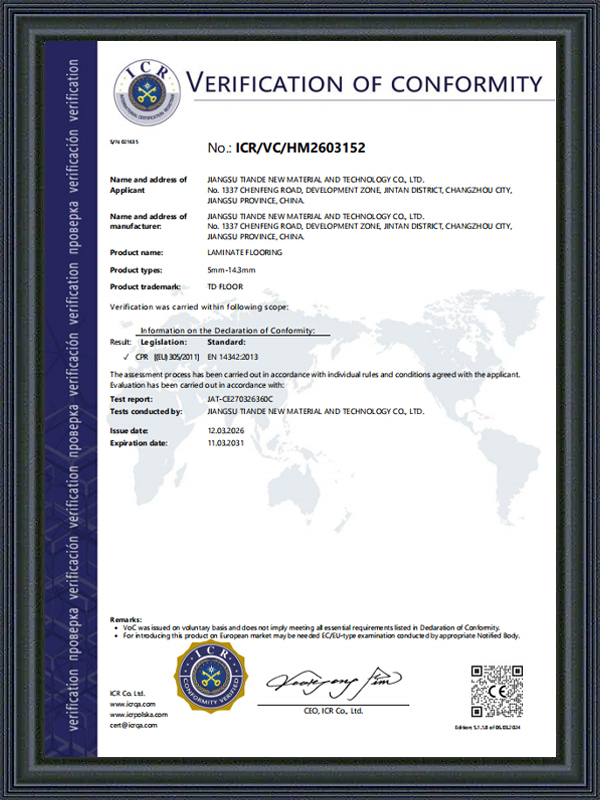
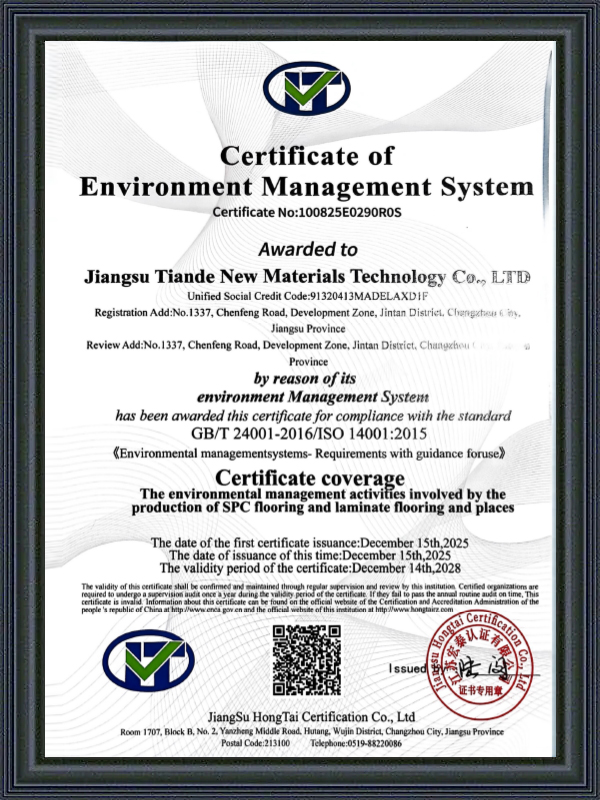
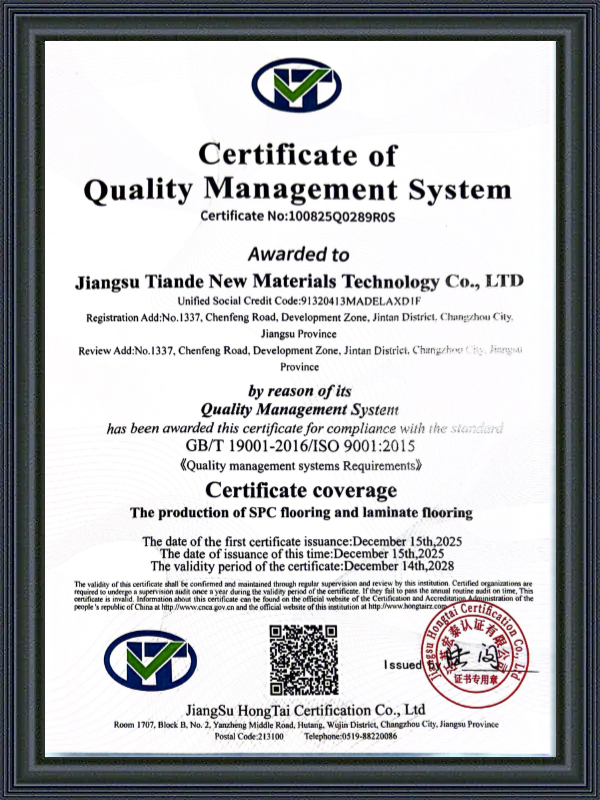
Jiangsu Tiande New Material and Technology Co., Ltd. employs a six-sigma quality management system with in-line thickness scanning, spectrophotometric color matching, and peel adhesion testing every 500 meters of production. The facility is ISO 9001 and ISO 14001 certified, and each batch of peel and stick PVC flooring is traceable to raw material lot numbers, ensuring full accountability from compounding to final packaging.
Steam mops are generally not recommended because the high heat and moisture can soften the adhesive bond and cause edge curling. For daily cleaning, a damp microfiber mop with a neutral pH cleaner is sufficient. For the Kitchen series, which has a UV-cured topcoat, occasional use of a steam mop at the lowest setting may be acceptable, but always test in an inconspicuous area first.
Summary: Understanding the material composition and classification of self-adhesive PVC flooring empowers end-users to select the right grade for their specific environment. From residential bedrooms to high-traffic commercial lobbies and moisture-prone kitchens, the layered engineering — combined with manufacturing expertise from Jiangsu Tiande New Material and Technology Co., Ltd. — ensures that easy install DIY self-adhesive PVC flooring delivers both performance and convenience. For detailed specifications and project-based samples, visit the product page for self-adhesive PVC flooring.


