English
Super Water Resistant Laminate vs SPC Flooring: Thermal Expansion & Comfort
Home > News > Industry News > Super Water Resistant Laminate vs SPC Flooring: Thermal Expansion & Comfort

Content
When comparing flooring options, most buyers focus on water resistance, scratch ratings, and price. But two quieter performance factors often decide how a floor feels in real daily use: thermal expansion and underfoot comfort. These qualities affect how the floor behaves when temperatures change, how it sounds when you walk across it, and whether your feet feel fatigued after hours of standing in the kitchen.
This guide compares two popular modern hard-surface floors: super water resistant laminate flooring and SPC (stone plastic composite) flooring. We examine their core construction, thermal movement, comfort profile, and help you decide which one fits your project. For a broader overview of technical topics, explore our flooring resources and installation guides.
Laminate flooring starts with a high-density fiberboard (HDF) core made from compressed wood fibers and resin. In super water resistant versions, the core is treated with wax, sealants, or a specialized waterproof coating that prevents moisture from penetrating the board. A decorative paper layer mimics the look of natural wood, and a transparent wear layer protects the surface from scratches and stains.
SPC flooring has a rigid core composed mainly of limestone powder and polyvinyl chloride (PVC). This stone-plastic composite is formed under heat and pressure into a dense, dimensionally stable plank. The core is topped with a printed vinyl layer and a clear wear layer, while a backing layer is often attached to improve sound absorption and stability.
The fundamental difference is material: laminate relies on compressed wood fiber, while SPC relies on mineral-filled polymer. That distinction drives nearly every difference in thermal expansion and underfoot comfort.
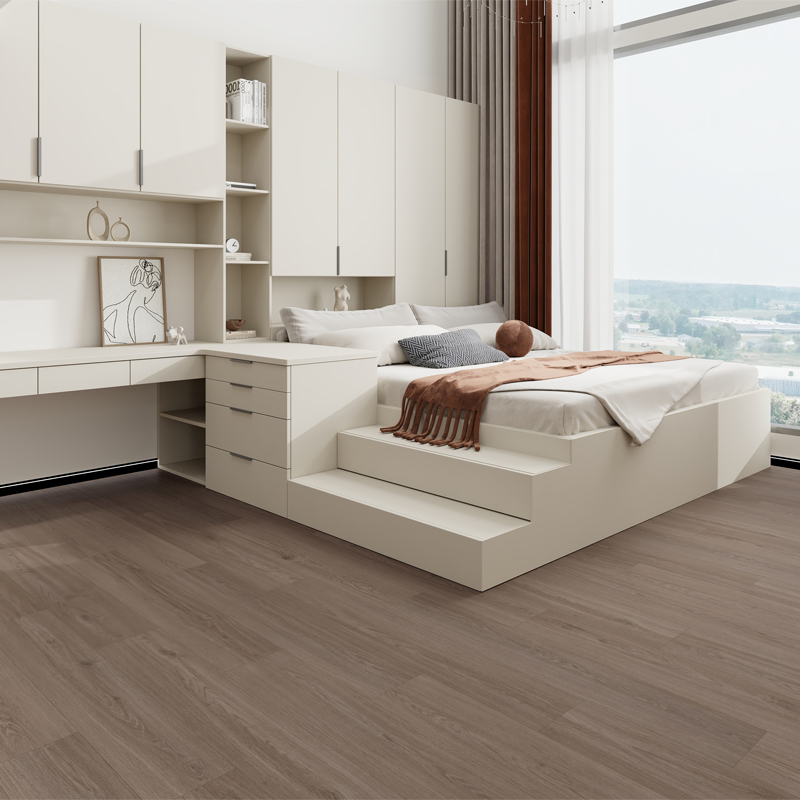
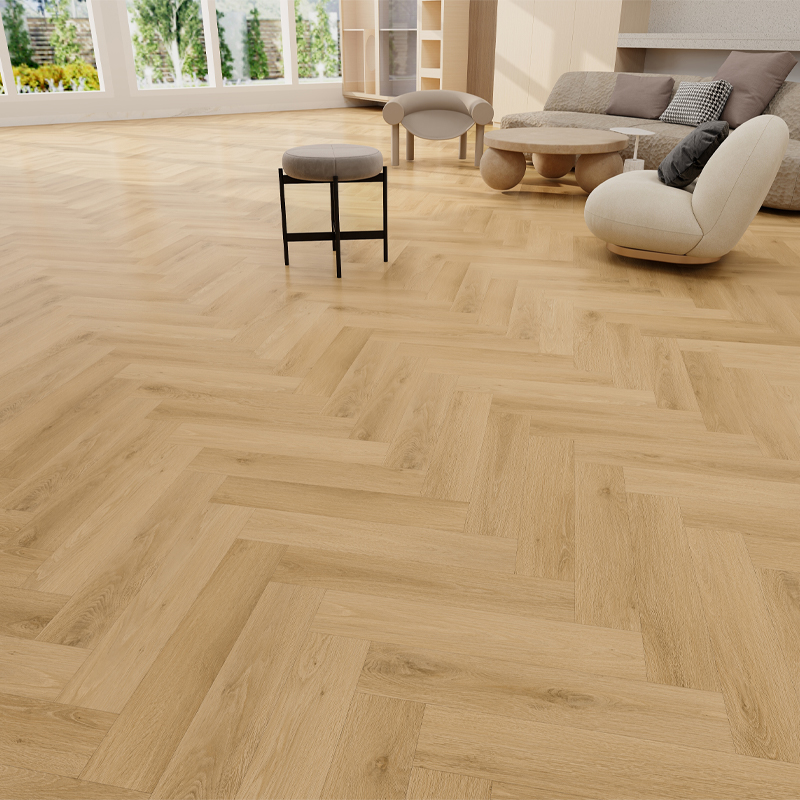
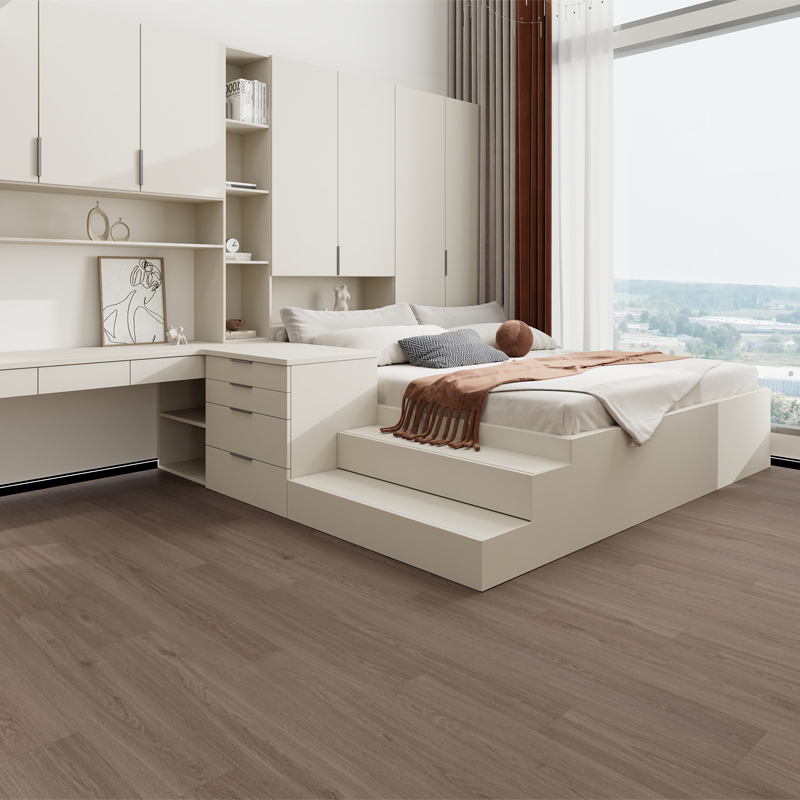 Super Water-Resistant Laminate Flooring with HDF CoreThis laminate uses a high-density fiberboard core and a protective surface layer to achieve low swelling in moisture. It suits bedrooms and other indoor spaces where wood-look aesthetics and easy installation are desired.View Product →
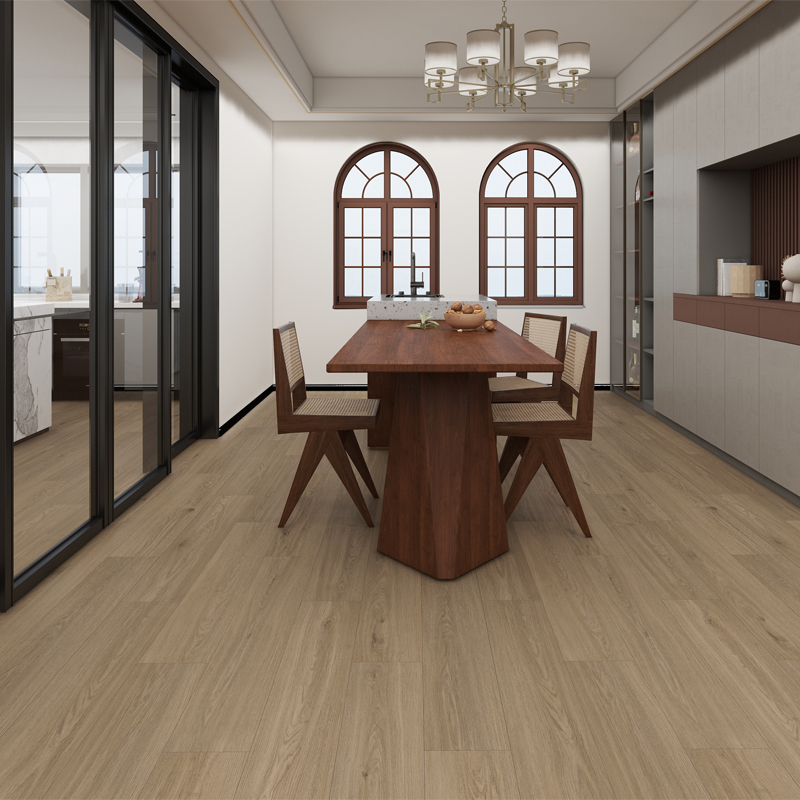
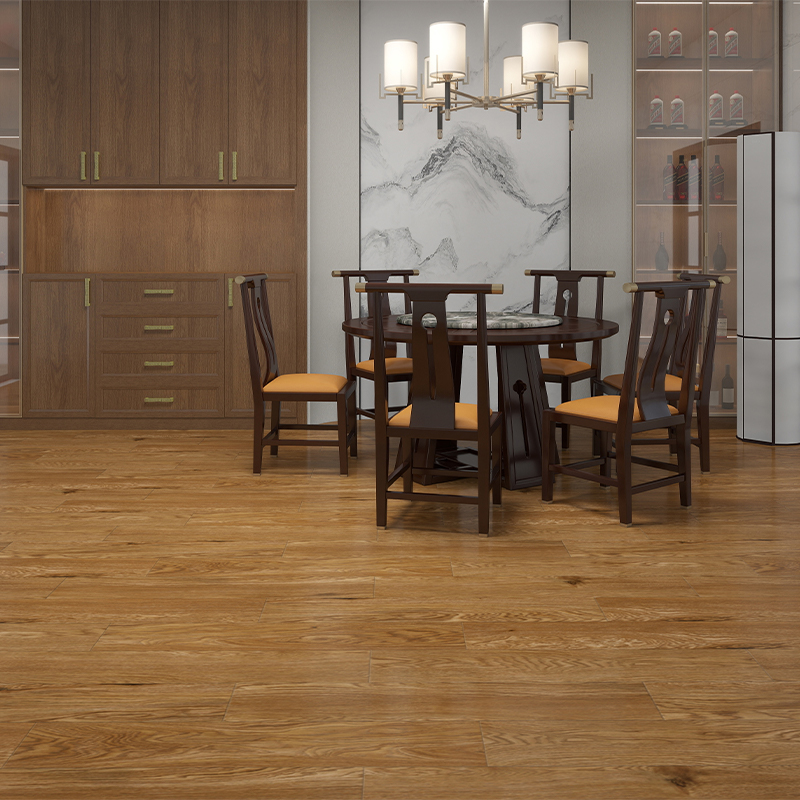
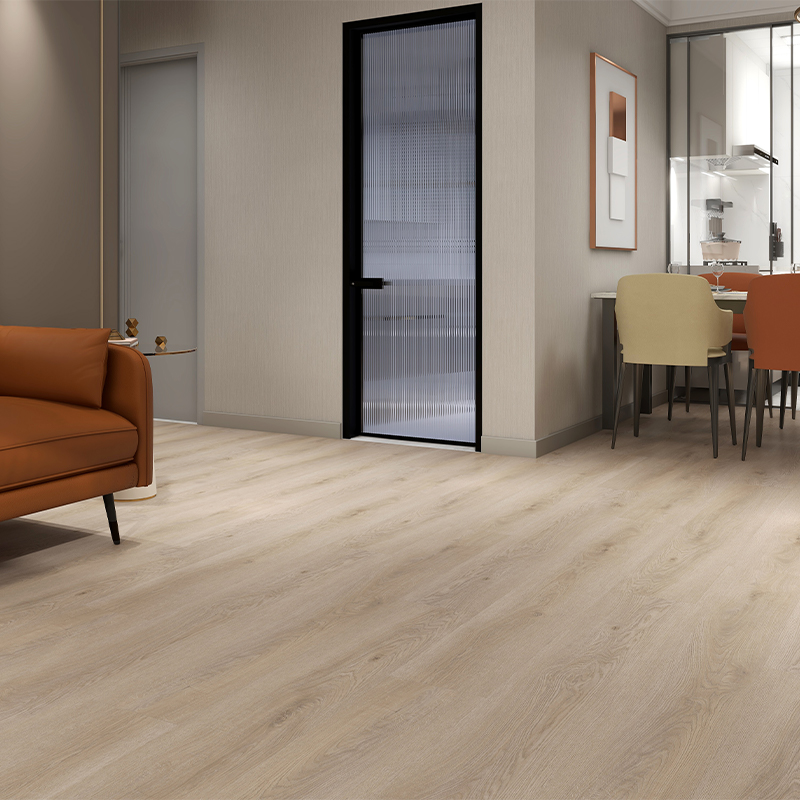 Waterproof SPC Vinyl Click Plank FlooringA rigid mineral-polymer core makes this vinyl plank fully waterproof and dimensionally stable. With a mechanical click lock and 100% waterproof construction, it fits kitchens, basements, and other moisture-prone areas.View Product →
All hard-surface floors expand and contract with temperature changes, but the amount of movement varies significantly by material.
Because the HDF core contains wood fibers, laminate responds to both temperature and humidity. When the room warms up, the board expands slightly; when humidity rises, the fibers absorb moisture and swell. Manufacturers require an expansion gap around the room perimeter so the floor has room to move. Without this gap, laminate can cup, gap at the seams, or even lift off the subfloor.
SPC's limestone-PVC core is far less reactive to heat and has almost no moisture response. The mineral content keeps the plank dimensionally stable across a wider temperature range. Expansion gaps are still recommended, but movement is minimal, which makes SPC a strong choice for rooms with large windows, underfloor heating, or strong seasonal temperature swings.
| Property | Super Water Resistant Laminate | SPC Flooring |
|---|---|---|
| Core material | HDF wood fiber | Limestone and PVC |
| Thermal expansion rate | Moderate to high | Low |
| Humidity sensitivity | Treated, but still present | Very low |
| Expansion gap needed | Yes, generous | Yes, smaller |
| Underfloor heating | Allowed with temperature control | Preferred |
If thermal expansion is your primary concern, SPC is mathematically the more stable floor. That said, modern super water resistant laminate has improved dramatically, and in a climate-controlled home, the practical difference may be small.
Underfoot comfort is subjective, but there are measurable differences in hardness, warmth, and acoustics between the two floors.
The wood-fiber core of laminate has a higher insulating value, so it feels warmer when you walk barefoot, especially in winter. The core also has a tiny amount of flex, which many people describe as a softer step compared to rigid SPC. Some manufacturers add an attached underlayment to laminate planks, which improves cushioning and reduces noise.
SPC's mineral core is very hard, which translates to a firm, solid feel underfoot. It also conducts heat more readily, so it can feel cooler to the touch. Without an attached underlayment, SPC can produce a hollow sound or echo, especially over a concrete subfloor.
The good news is that underlayment solves most comfort complaints. A thin IXPE or EVA foam layer adds cushioning, isolates sound, and provides thermal insulation. Choose a thicker underlayment if underfoot comfort is your top priority.
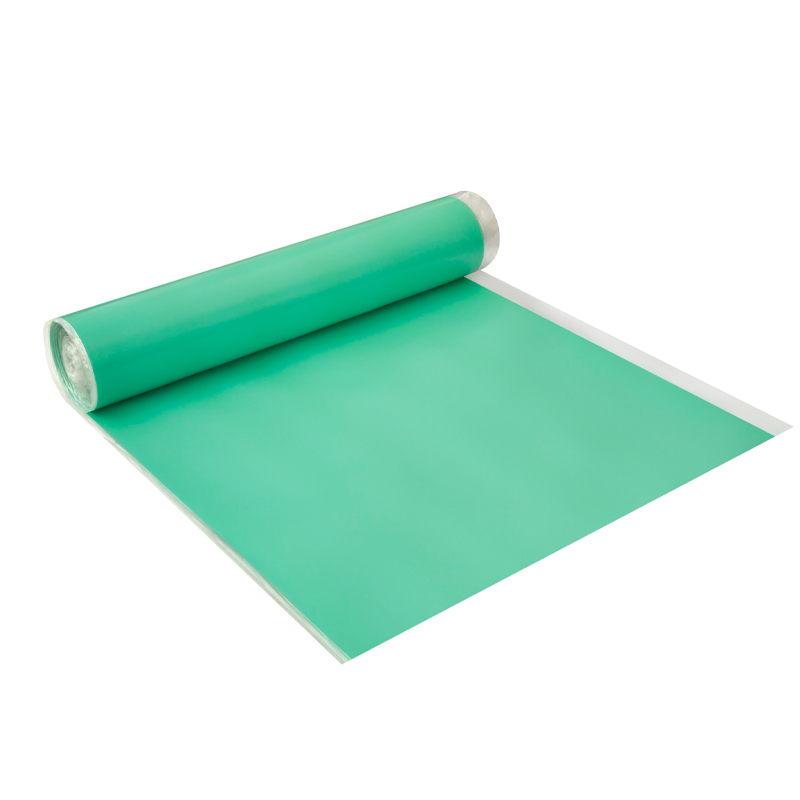 3mm IXPE Foam Underlayment with PE FilmThis underlayment combines a 3mm cross-linked polyethylene foam with a 0.04mm vapor-barrier film. It adds cushioning, thermal insulation, and moisture protection beneath hard-surface floors, improving comfort and reducing noise.View Product →
SPC is fully waterproof and can handle standing water, making it suitable for bathrooms, laundry rooms, and mudrooms. Super water resistant laminate resists spills and daily damp mopping, but standing water or long-term moisture exposure is not recommended for the wood-fiber core.
Both floors use a click-lock system. SPC planks are heavier and denser, which can be tiring to carry but also means they feel substantial once installed. Laminate is lighter and easier to cut with standard woodworking tools. Both require an expansion gap and a flat, clean subfloor.
SPC resists dents from heavy furniture and impact well, thanks to its rigid core. Laminate has excellent scratch resistance, especially with an aluminum oxide wear layer. Both floors are easy to clean with a soft brush or a damp mop and are suitable for busy households.
Choose super water resistant laminate if you prefer a warmer, slightly softer feel underfoot, want a more wood-like visual texture, and plan to keep your rooms at a stable temperature with good humidity control. It is also generally lighter and easier to handle during installation.
Choose SPC flooring if you need maximum dimensional stability, genuine waterproof performance, and a harder, more durable surface. It is the better choice for areas with underfloor heating, direct sunlight through large windows, or high moisture risk. Pair it with a comfortable underlayment to close the comfort gap.
Still undecided? Read more in our flooring FAQ or contact our team for project-specific advice.
Yes. Laminate's HDF wood-fiber core responds to temperature and humidity changes with noticeable expansion and contraction. SPC's limestone-PVC core is much more dimensionally stable, so it moves far less under the same conditions.
SPC is firmer and cooler than laminate. Without underlayment, it can feel hard and sound hollow. Adding an IXPE, EVA, or cork underlayment significantly improves cushioning, sound absorption, and thermal insulation.
No. Super water resistant laminate is designed to handle spills, splashes, and damp mopping without swelling, but it is not fully waterproof. Standing water or prolonged moisture can still damage the core over time.
SPC flooring is generally the better match for underfloor heating because its low thermal expansion and high heat conductivity transfer warmth efficiently. Laminate can be used with underfloor heating if the temperature is carefully controlled, but SPC is the safer and more reliable choice.