English
Dry Back PVC vs Click Lock SPC: Structural Differences and Subfloor Prep
Home > News > Industry News > Dry Back PVC vs Click Lock SPC: Structural Differences and Subfloor Prep

Content
Choosing between dry back PVC flooring and click lock SPC flooring is rarely as simple as comparing price tags. Both belong to the PVC flooring family and both deliver a waterproof, low-maintenance surface, but their internal structure is fundamentally different. A dry back PVC plank is flexible and fully glued to the subfloor, while a click lock SPC plank is built around a rigid limestone-PVC composite core and installed as a floating floor. That single structural difference determines subfloor preparation, response to heat and humidity, and ease of repair.
For contractors, distributors and importers, understanding these differences prevents failed installations and costly callbacks. This guide compares the two systems from a manufacturing perspective, covering core construction, installation behaviour and subfloor preparation requirements for each.
Dry back PVC flooring, also called glue-down LVT, has a flexible PVC core and a square, unprofiled edge. The installer spreads pressure-sensitive adhesive over the subfloor with a notched trowel, presses the plank into the adhesive, and rolls the entire surface for full contact. Because the floor is completely bonded to the substrate, the subfloor must be smooth, clean, flat and dry. A flexible plank of 2 to 4 mm cannot hide a bump or depression; every defect in the substrate eventually becomes visible on the walking surface.
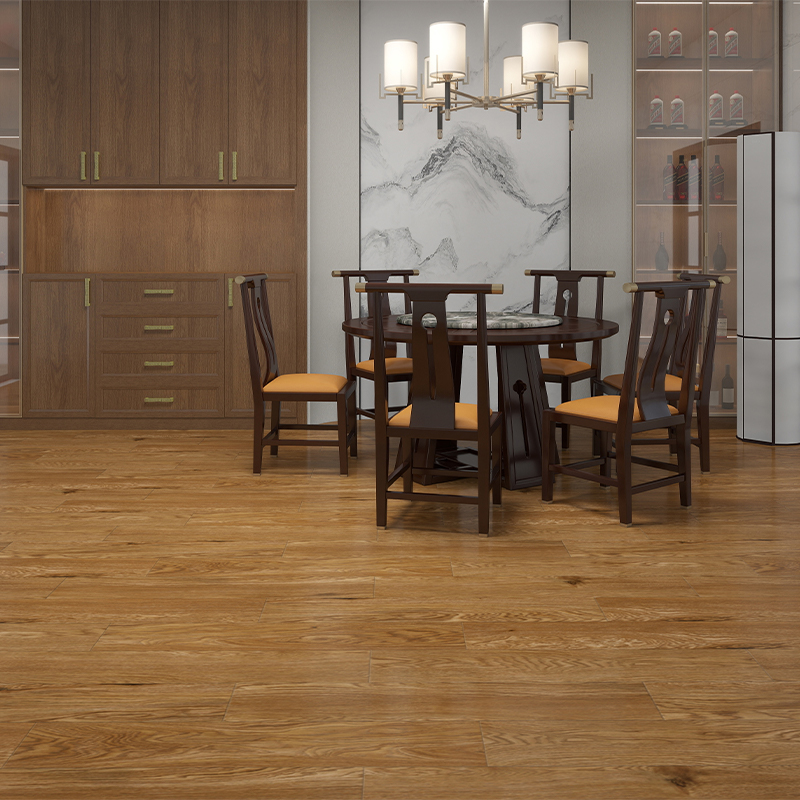
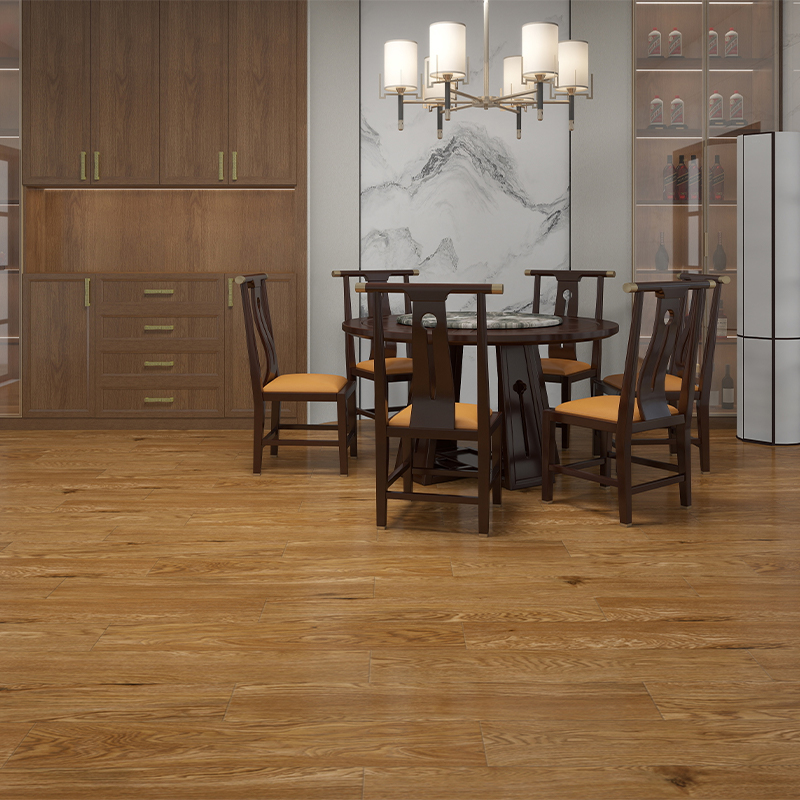 Waterproof Adhesive-Fixed Dry Back PVC Plank FlooringThis slim, glue-down PVC flooring offers a cost-effective alternative to rigid-core planks. Its Bfl-s1 fire rating, waterproof construction, and moisture resistance make it suitable for kitchens and basements, provided the subfloor is perfectly leveled.View Product →
Click lock SPC flooring is built around a rigid core of limestone powder and PVC, topped by a printed decorative layer and a transparent wear layer. The planks are joined with a click profile and installed as a floating floor without adhesive. The rigid core provides high dimensional stability and dent resistance and bridges minor subfloor irregularities that would ruin a glue-down floor. The joint also enables faster, glue-free installation and easy replacement of individual planks. For a broader look at this category, see our article on the main benefits of SPC vinyl flooring.
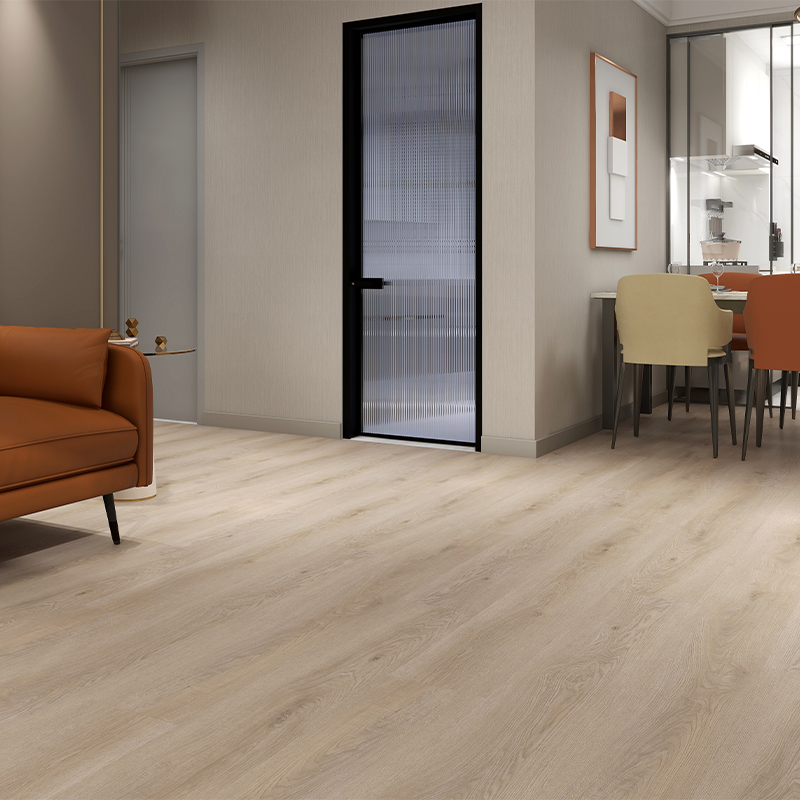
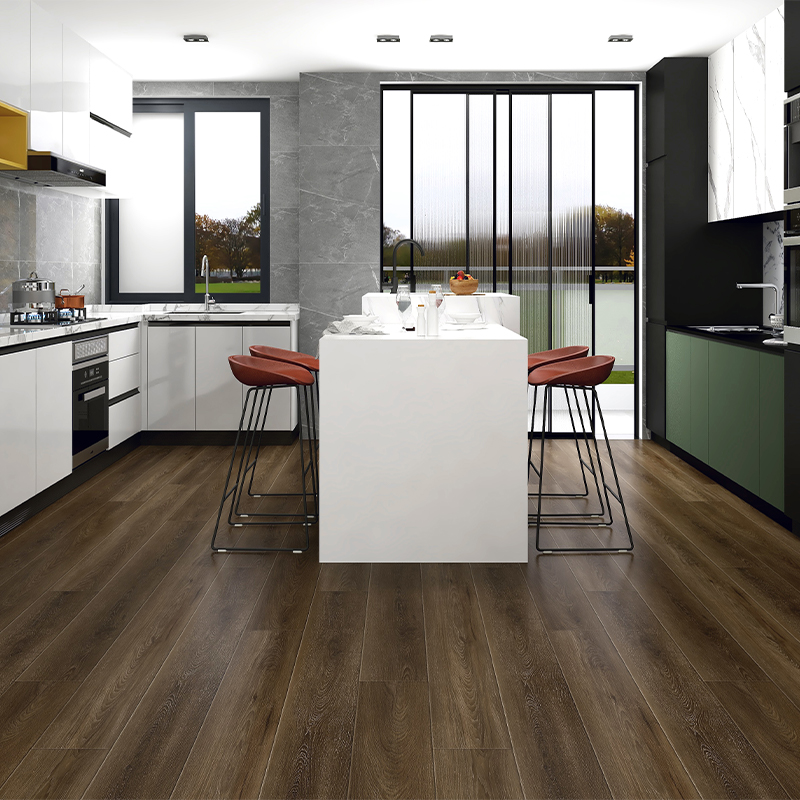
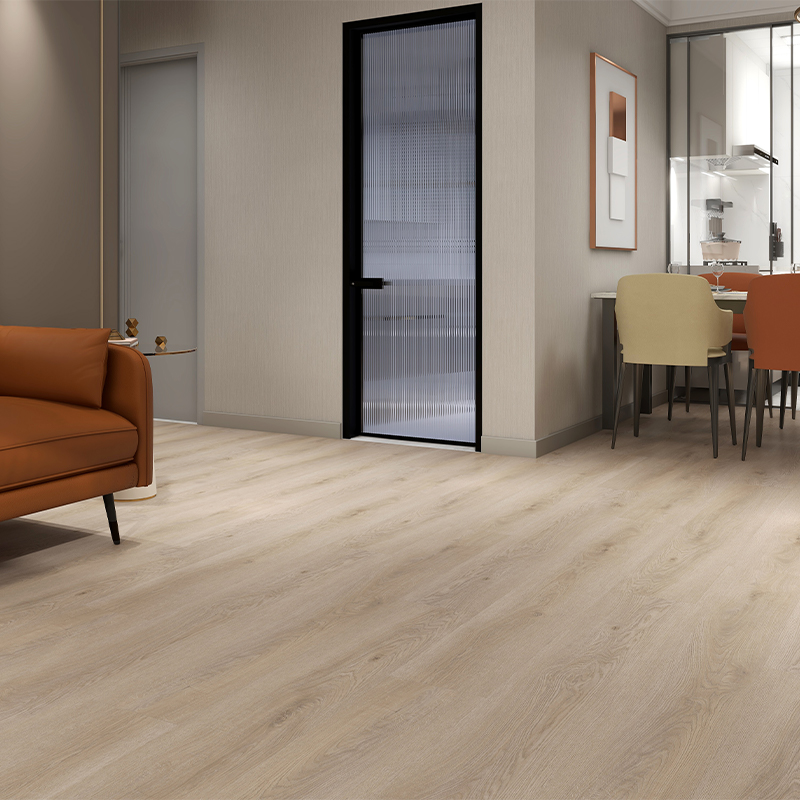 Waterproof Click-Lock SPC Vinyl Plank FlooringFeaturing a rigid limestone-PVC core, this floating floor provides dimensional stability and dent resistance. Its glue-free tongue-and-groove lock simplifies installation and replacement, while the 100% waterproof construction suits high-moisture areas like kitchens and basements.View Product →
| Property | Dry Back PVC | Click Lock SPC |
|---|---|---|
| Core material | Flexible PVC | Limestone-PVC composite |
| Edge profile | Square edge, no lock | Click-lock joint |
| Installation method | Full-surface adhesive | Floating, no glue |
| Dimensional stability | Moderate | High |
| Underlayment | Not recommended | Recommended for sound and moisture |
| Typical plank thickness | 2-4 mm | 4-8 mm |
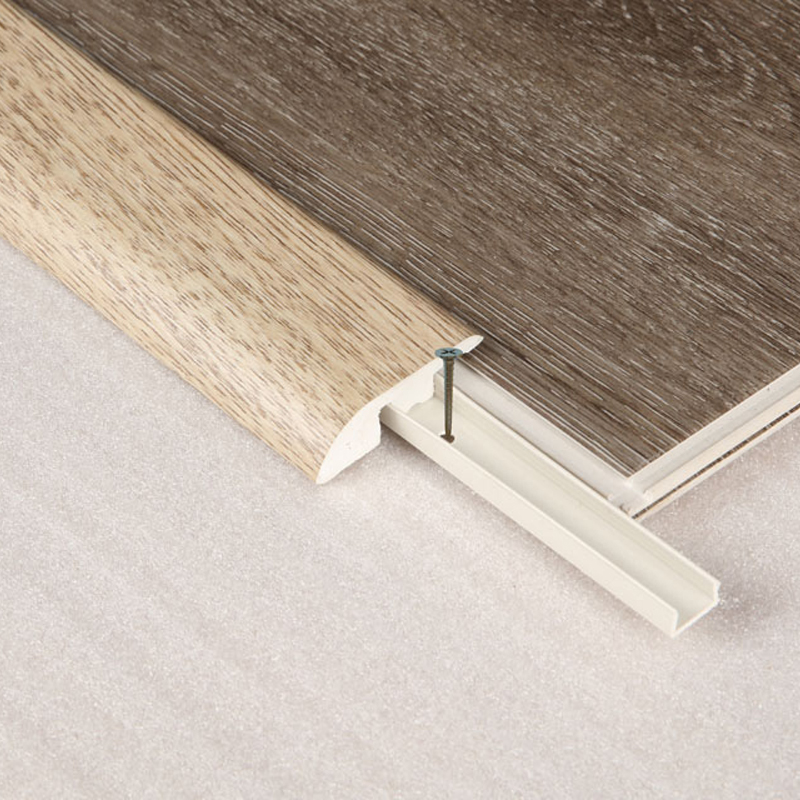
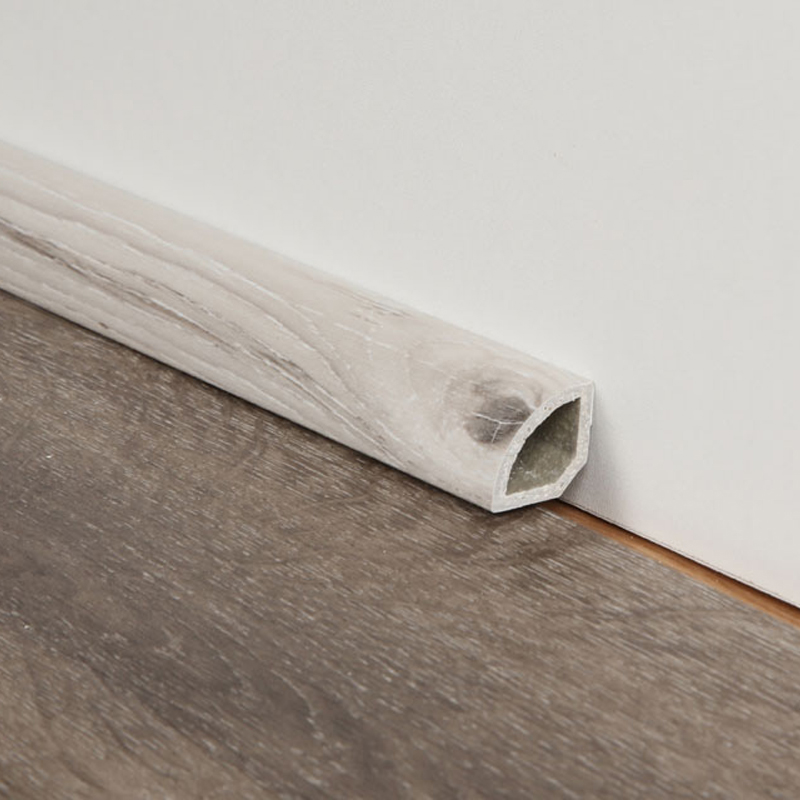
Dry back PVC is flexible and bonded to the subfloor, so the adhesive restricts its movement. Small rooms are usually fine, but large areas need expansion joints at doorways, and the adhesive must hold down the edges. Click lock SPC floats as a single large sheet, so it expands and contracts freely. Installers must leave a 5 mm to 8 mm expansion gap around the perimeter and around fixed objects, later covered by skirting, scotia or transition profiles.
Both surfaces are made of PVC and neither absorbs water. The main difference is at the joints. A properly rolled dry back floor has fully adhered seams that resist water ingress well. A click lock SPC joint is mechanically strong but not watertight; standing water can travel through the joint to the underlayment or subfloor. This is why professional installers seal SPC perimeters in wet areas with silicone and why an underlayment with a PE film is recommended over concrete.
Dry back PVC sits directly on the substrate, feeling quieter and warmer underfoot than thin floating vinyl, but it offers little cushioning, and heavy point loads can cause indentation if the adhesive bed is uneven. SPC is harder and can feel tile-like, especially over concrete. A 2 mm acoustic cork or IXPE underlayment adds cushioning, reduces impact sound and improves thermal insulation.
Glue-down dry back PVC is the least forgiving system when it comes to subfloor quality. The flexible plank follows the contour of the substrate, so every defect telegraphs to the walking surface. The subfloor must meet four fundamental requirements before adhesive is applied:
Pro tip: Never install dry back PVC over new concrete before 28 days of curing. Even when the surface looks dry, residual moisture will attack the adhesive and cause bubbling within months.
After preparation, the installer applies adhesive at the coverage rate stated by the manufacturer and rolls the floor in two directions within the working time. Underlayment is not used beneath dry back flooring because the product demands full-surface bond to the substrate.
Click lock SPC is more forgiving of minor subfloor imperfections because the rigid core bridges small gaps. The usual flatness requirement is also 3 mm over 2 m, but exceeding the tolerance stresses the click joints, causing creaking, joint separation or breakage. Preparation remains essential, but the workflow differs from a glue-down floor.
A well-chosen underlayment reduces impact sound, smooths tiny irregularities and adds a moisture barrier. The 2 mm acoustic cork underlay with a vapour-barrier PE film, for example, combines sound insulation and moisture protection in one layer.
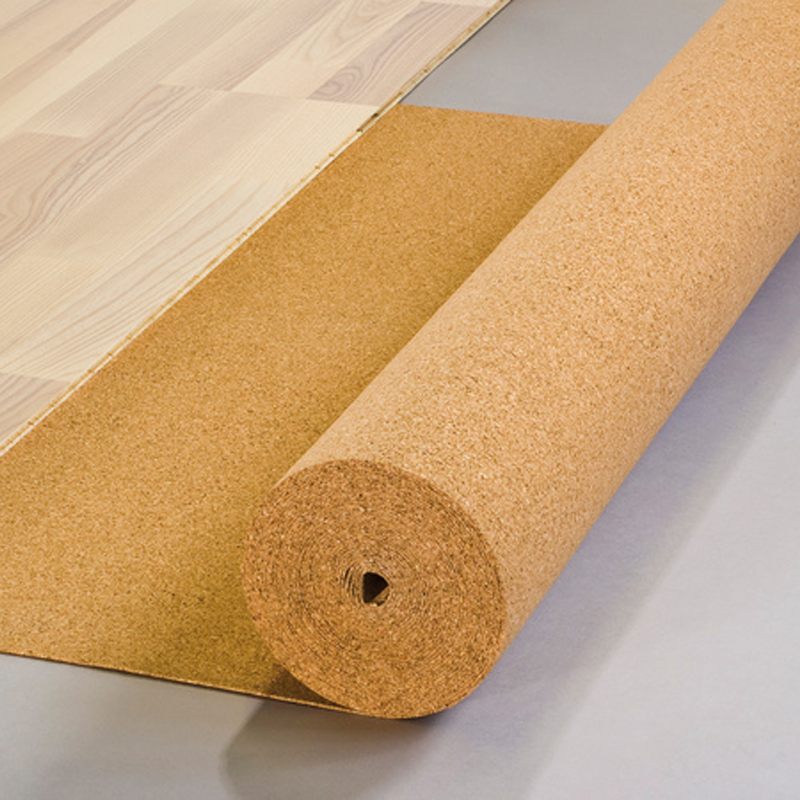 2mm Acoustic Cork Underlay with PE Vapour BarrierThis natural cork underlayment combines sound insulation with a moisture-blocking PE film. It smooths minor subfloor irregularities, aids thermal regulation, and helps floating floors perform properly by providing cushioning and vapor protection in a single thin layer.View Product →
Both systems perform well when installed under the right conditions. The best choice depends on subfloor condition, installation schedule and long-term maintenance expectations.
| Factor | Dry Back PVC | Click Lock SPC |
|---|---|---|
| Installation speed | Slower: adhesive, open time, rolling | Faster: click together |
| Subfloor sensitivity | Critical | Moderate |
| Repair options | Difficult: cut out bonded plank | Easy: replace individual plank |
| Profile height | Very low, 2-4 mm | Higher, 4-8 mm |
| Wet-area installation | Seams resist water when rolled well | Needs sealed perimeter and vapour barrier |
| Underfloor heating | Compatible with approved adhesives | Compatible, check product specification |
Yes, if the tile is structurally sound, level and free of wax or sealers. Fill the grout lines with a levelling compound, clean the surface thoroughly and confirm that the adhesive will bond to the tile. If the tile is uneven or has loose sections, remove it and level the substrate instead.
Most manufacturers recommend it for sound reduction and to prevent a hollow feel. Some SPC planks have a pre-attached pad, in which case a separate underlayment is not required. On concrete slabs, an underlayment with an integrated PE film also serves as a vapour barrier.
Both are suitable if installed correctly. For dry back PVC, confirm full adhesive coverage with no hollow spots and seal the perimeter with silicone. For click lock SPC, use a moisture-barrier underlayment, seal the perimeter and seal every pipe penetration so standing water cannot migrate through the joints.
Both systems work well with a maximum deviation of 3 mm over 2 m. Dry back PVC is the stricter system because the flexible plank reveals every bump and dip. SPC tolerates small imperfections better, but exceeding the tolerance creates stress on the click joints, so the flatness check should never be skipped.
Dry back PVC and click lock SPC belong to the same vinyl family, but they are different systems with different structural logic. Dry back PVC is a flexible, fully adhered floor that demands a clean, smooth and dry subfloor, and rewards it with low profile height and stable seams. Click lock SPC is a rigid, floating floor that installs quickly, tolerates minor subfloor imperfections and is far easier to repair, provided you respect the flatness tolerance and leave the required expansion gap.
Whichever system you select, treat subfloor preparation as part of the flooring product itself. Measure flatness and moisture before installation, choose the correct adhesive or underlayment, and work with a supplier who can specify the right components for your project. If you are evaluating dry back PVC or click lock SPC for an upcoming project, contact our team for specification sheets, samples and detailed installation guidance.