Why Rigid Core SPC Flooring Beats Dry Back Vinyl in Temperature Swings
Home > News > Industry News > Why Rigid Core SPC Flooring Beats Dry Back Vinyl in Temperature Swings



Content
Temperature fluctuations are the silent enemy of modern flooring. Across seasons, under direct sunlight, or with underfloor heating, materials constantly expand and contract. For years, contractors and distributors struggled with traditional dry back vinyl, dealing with unsightly bubbles, chipped edges, and cracked adhesive lines. Today, the industry is shifting towards rigid core SPC (Stone Plastic Composite) flooring as the definitive solution. But what exactly makes SPC outperform dry back vinyl in these demanding conditions? This article explores the engineering principles, installation mechanics, and real-world performance of both materials.
All materials have a coefficient of thermal expansion. When temperatures rise, molecules vibrate more and require more space, causing the material to expand. Conversely, cooling forces the material to contract. Flooring installed in spaces without climate control experiences these forces daily. Over time, this cycle leads to catastrophic failure if the flooring cannot accommodate the movement.
Dry back vinyl is inherently flexible. Its PVC composition softens quickly under heat. Since it is glued across its entire surface to the subfloor, it has nowhere to expand to. The ensuing internal stress causes the vinyl to blister, lift, or form unsightly ridges. In cold weather, the same material becomes brittle and rigid, causing the adhesive bond to fail and edges to crack or curl upwards.
SPC flooring is a rigid composite. The core consists of limestone powder and PVC, creating a solid, mineral-infused board. This structure drastically reduces the thermal expansion rate. The floor maintains its dimensional stability, allowing it to withstand violent temperature swings without warping, cracking, or losing its shape.
The "Stone" in Stone Plastic Composite is the key differentiator. By compounding limestone with PVC, manufacturers create a dense, rigid core that resists both thermal deformation and impact damage. Unlike dry back vinyl, which is entirely flexible, SPC planks are rigid boards. They feature a click-lock system on all sides. When assembled, they form a continuous, floating floor that is independent of the subfloor.
This structural rigidity means that the only expansion gaps required are around the perimeter of the room. These gaps accommodate the minor thermal movements without compromising the floor's overall integrity. This is a stark contrast to dry back vinyl, which relies heavily on environmental conditions and adhesive resilience.
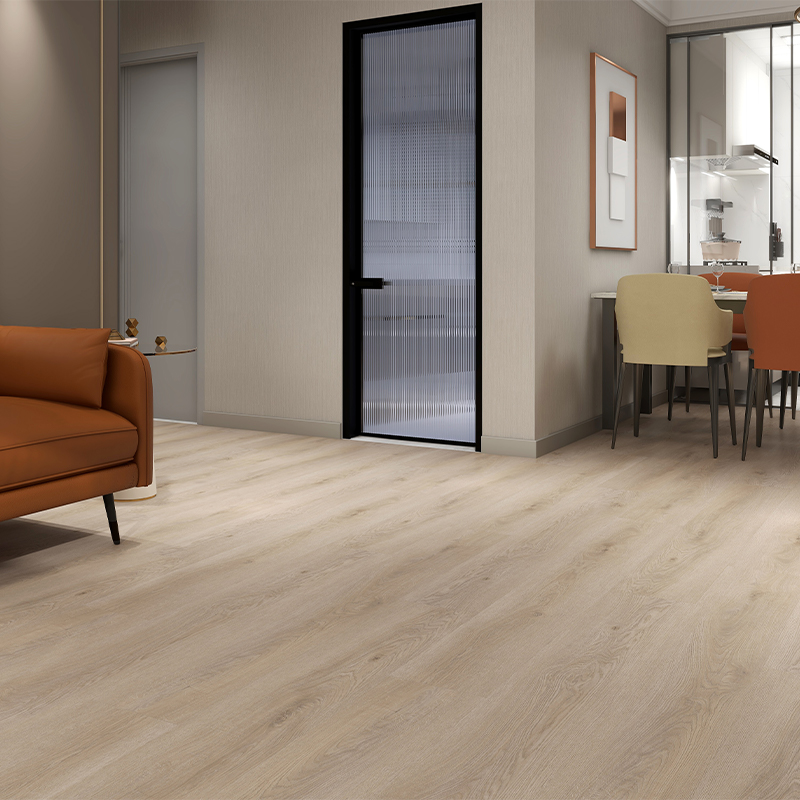
When it comes to balancing rigid stability with easy installation, the click-lock mechanism is the standout feature. The following SPC product showcases this robust engineering perfectly.
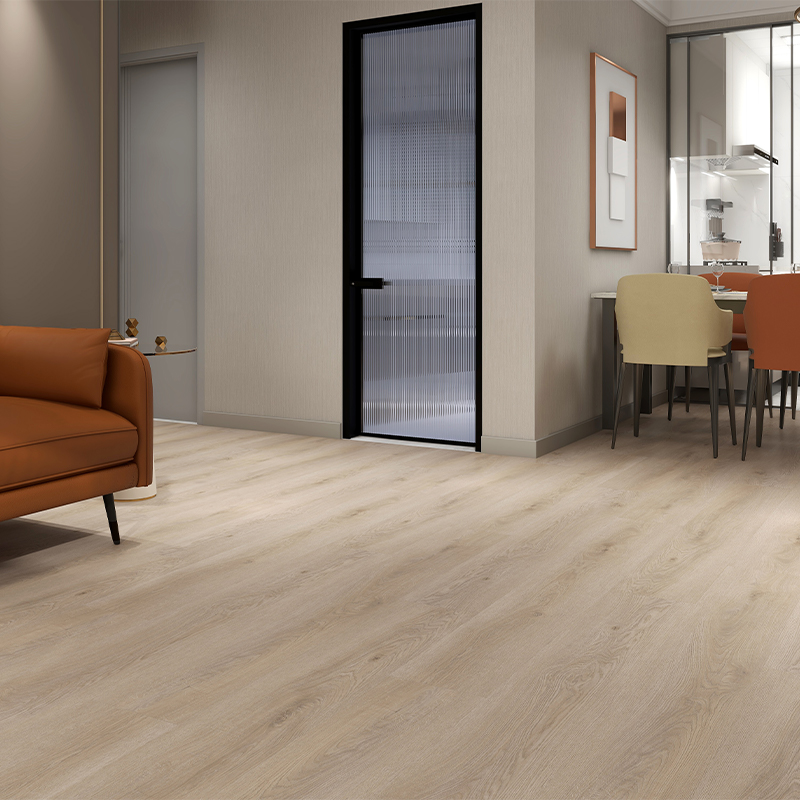 Waterproof SPC Vinyl Flooring Click Plank with Precision Locking SystemThis rigid-core SPC plank features a click-lock mechanism that ensures tight seams and easy manual assembly, making it ideal for spaces where dimensional stability and waterproof performance matter.View Product →
Its dense core and precision-milled locking system provide exceptional holding power, ensuring tight seams even as temperatures shift.
To fully appreciate the advantages of SPC in temperature-fluctuating environments, it is essential to compare the two materials side-by-side.
| Property | Rigid Core SPC | Dry Back Vinyl |
|---|---|---|
| Dimensional Stability | Excellent (mineral rigid core) | Limited (flexible PVC) |
| Thermal Expansion Rate | Low | High |
| Cold Temperature Behavior | Maintains integrity | Becomes brittle |
| Installation Method | Floating (click-lock) | Full-surface adhesive |
| Adhesive Dependency | None | High |
| Subfloor Tolerance | Good (minimizes minor flaws) | Poor (telegraphs defects) |
| Lifespan in Variable Conditions | Long and stable | Prone to blistering/cracking |
The table illustrates a clear pattern. Dry back vinyl's flexibility becomes its liability when exposed to thermal stress. SPC's rigid core, however, acts as a stable framework, resisting the forces that destroy traditional glue-down floors.
The installation method heavily influences how a floor responds to heat and cold. Dry back vinyl is permanently glued to the ground. It has no room to expand. Under the scorching summer sun through a glass door, the vinyl sheet or plank will compress, bubble, or delaminate.
SPC flooring's click-lock system allows it to float independently. It can expand and contract as a single unit against the walls, with appropriate expansion gaps. This independent movement prevents the stress fractures and adhesive failures typical of dry back vinyl. For busy commercial spaces or rooms with fluctuating heat loads, this floating installation is a game-changer.
For interior spaces like kitchens and sunrooms, where thermal stress is part of daily life, tile-look SPC offers both style and resilience.
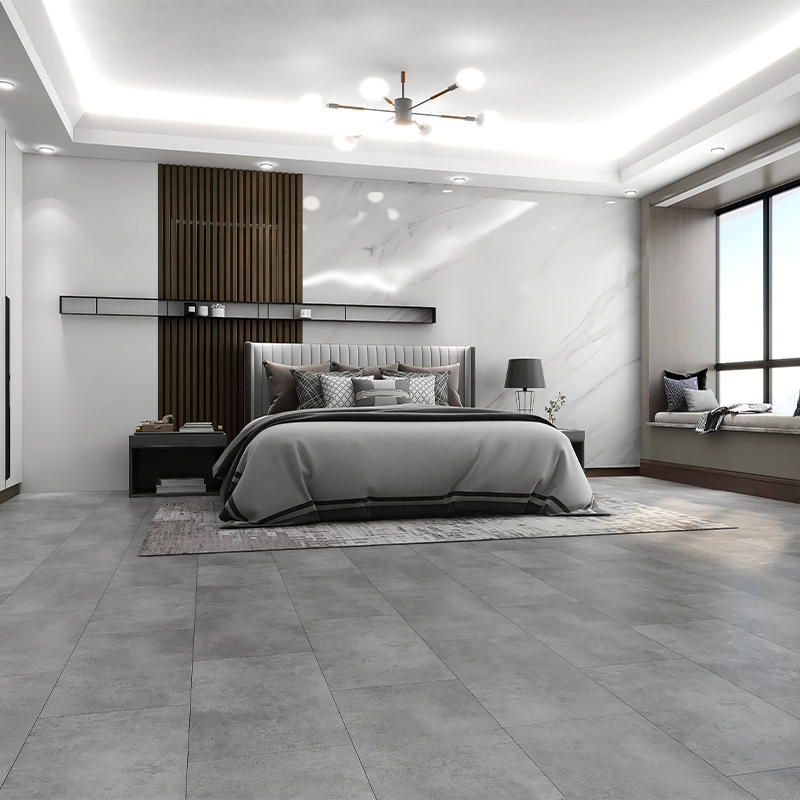 Tile Look SPC Flooring for Living Room and KitchenThis tile-look SPC flooring combines ceramic aesthetics with a waterproof, formaldehyde-free rigid core, offering a durable floating installation that handles kitchen moisture and thermal stress.View Product →
This series brings the aesthetic of ceramic while eliminating the brittleness and coldness of tile.
While all spaces experience some level of temperature change, certain areas are notorious for extreme fluctuations:
In these environments, the choice of flooring becomes critical. Dry back adhesive bonds are pushed to their limits and often fail. SPC flooring, on the other hand, is engineered to endure. Its cohesive, rigid structure ensures that even in the most challenging settings, the floor's appearance and function remain intact.
Mass-produced flooring might look similar, but performance under temperature stress reveals manufacturing quality. A consistent core density prevents delamination and weak spots. At Jiangsu Tiande's 46,000-square-meter manufacturing base, automated production lines and strict quality control ensure every SPC plank has a homogeneous core. Our team's 20 years of flooring expertise translate into precise formulas, calibrated for maximum rigidity and dimensional stability.
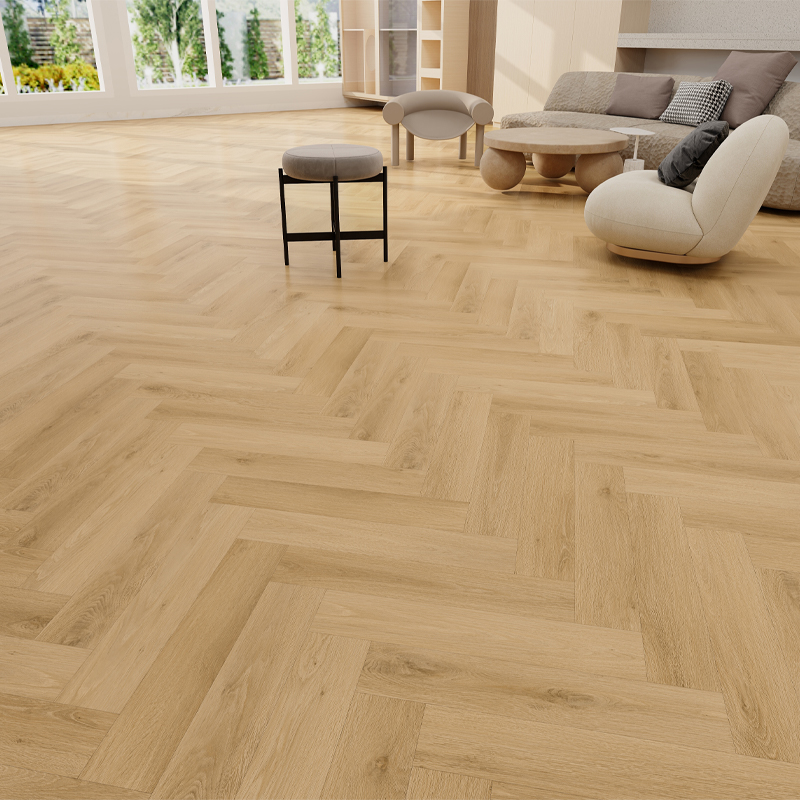
The thickness of the wear layer and the density of the core are carefully balanced. This is why Tiande's SPC flooring not only withstands temperature fluctuations but does so without compromising on aesthetic durability. Beyond standard planks, our manufacturing expertise extends to specialized formats like herringbone designs that demand even greater precision.
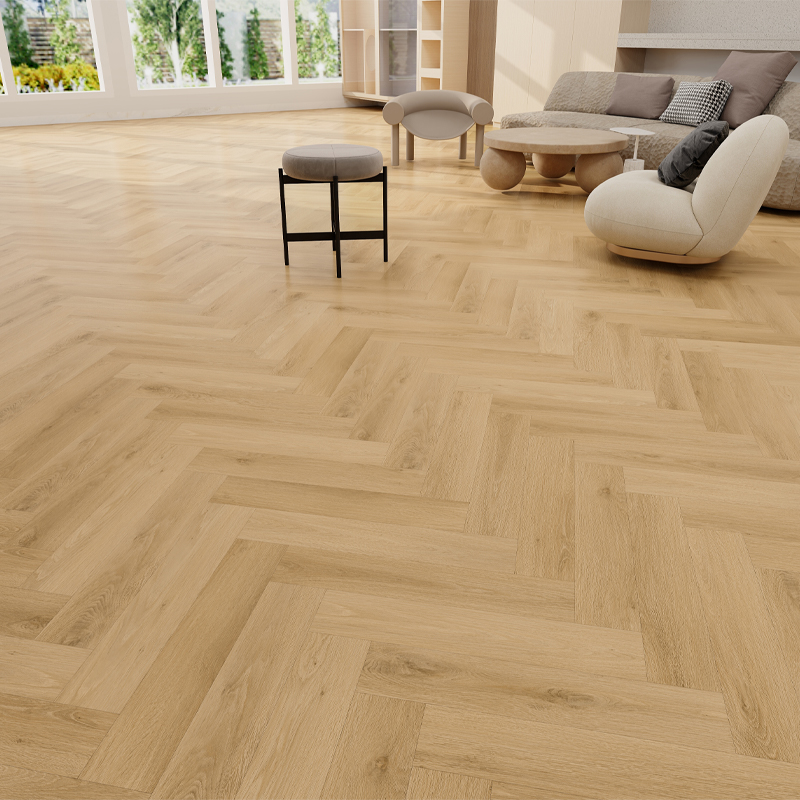 Fire-Resistant Herringbone SPC Vinyl FlooringThis herringbone SPC flooring provides precise geometric patterns with Bfl-s1 fire resistance and full waterproofness, suited for radiant heating environments and demanding installations.View Product →
Each piece is cut to exact tolerances, ensuring flawless geometric patterns that remain stable in demanding environments. These options are perfectly suited for radiant heating systems. Explore the complete SPC flooring collection to see the available formats. For a deeper dive into the general advantages, check out our article on the benefits of SPC vinyl flooring.
Yes. The rigid mineral core has a low thermal expansion coefficient, designed specifically to resist the dimensional changes that cause other floors to fail.
Not necessarily, but it requires perfect installation conditions and robust adhesives. Even then, it is far more prone to expansion blisters and edge cracking than floating SPC.
Yes. SPC feels firmer and more substantial. Because it floats, it works best with an underlayment to soften acoustic feedback and provide thermal insulation.
The rigid nature of SPC masks moderate subfloor imperfections better than dry back adhesive methods, which often telegraph irregularities.
When the temperature starts to change, the weaknesses of traditional dry back vinyl quickly become apparent. Adhesive failures, brittleness, and unsightly expansion gaps ruin both the aesthetics and functionality of a space. Rigid core SPC flooring, with its stone-based core and floating click-lock installation, provides a superior alternative that thrives where other materials fail. For distributors, contractors, and homeowners seeking a fail-safe flooring investment, SPC is not just a trend; it is the engineering-driven answer to thermal instability.