SPC Flooring vs Dry Back PVC: Which Wins in Commercial High-Traffic Spaces?
Home > News > Industry News > SPC Flooring vs Dry Back PVC: Which Wins in Commercial High-Traffic Spaces?



Content
Floors in commercial high-traffic areas face a relentless daily routine: thousands of foot passes, shopping carts rolling over joints, heavy shelving pressing into the surface, and constant spray-and-mop cleaning. Specifiers and facility managers need a floor that will not show dents, open seams, or premature wear within the first few years of service.
Two vinyl-based systems dominate the conversation: SPC flooring and dry back PVC flooring. Both are waterproof, cost-effective alternatives to tile and hardwood, and both are installed worldwide in shops, offices, hotels, and clinics. But in the specific question of SPC flooring vs dry back PVC flooring for commercial high-traffic areas, the two constructions perform differently, and the choice depends on traffic type, cleaning regime, and budget. This article compares both systems on the factors that matter most.
SPC (stone plastic composite) flooring has a core made of limestone powder and PVC, fused under heat and pressure into a dense, rigid board. A printed décor layer and a clear polyurethane-coated wear layer sit on top, with a balanced backing layer underneath. Because the core is rigid, the planks keep their shape under load and do not expand or contract as much as flexible vinyl, which makes them well suited to open spaces and floating installations over existing floors.
The click-lock profile lets installers snap SPC planks together as a floating floor, without nails, staples, or adhesive. For commercial buyers, the main benefits are high indentation resistance, strong dimensional stability, quick installation, and the possibility of replacing a single damaged plank.
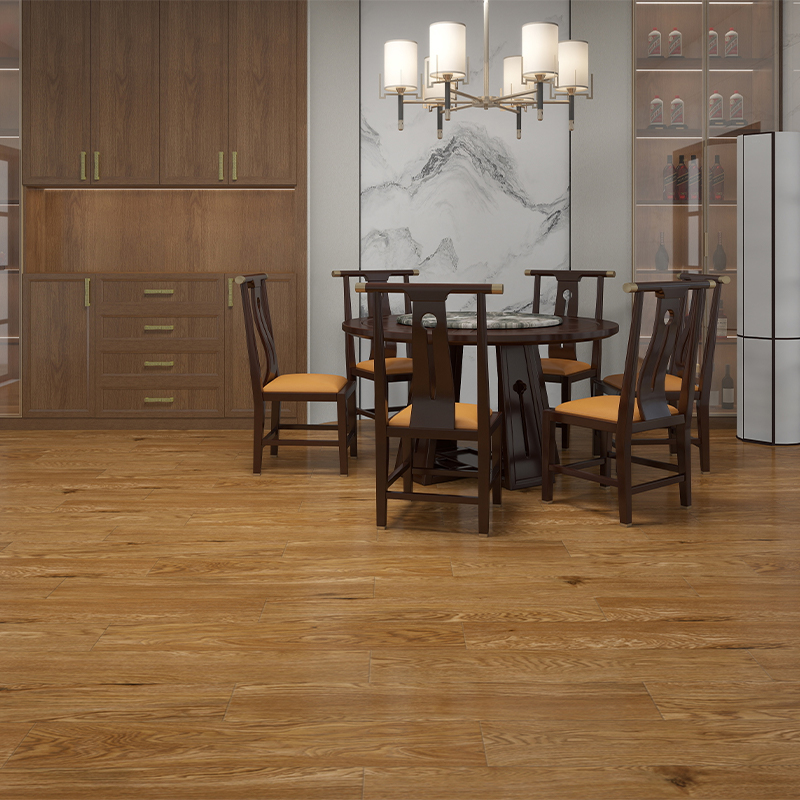
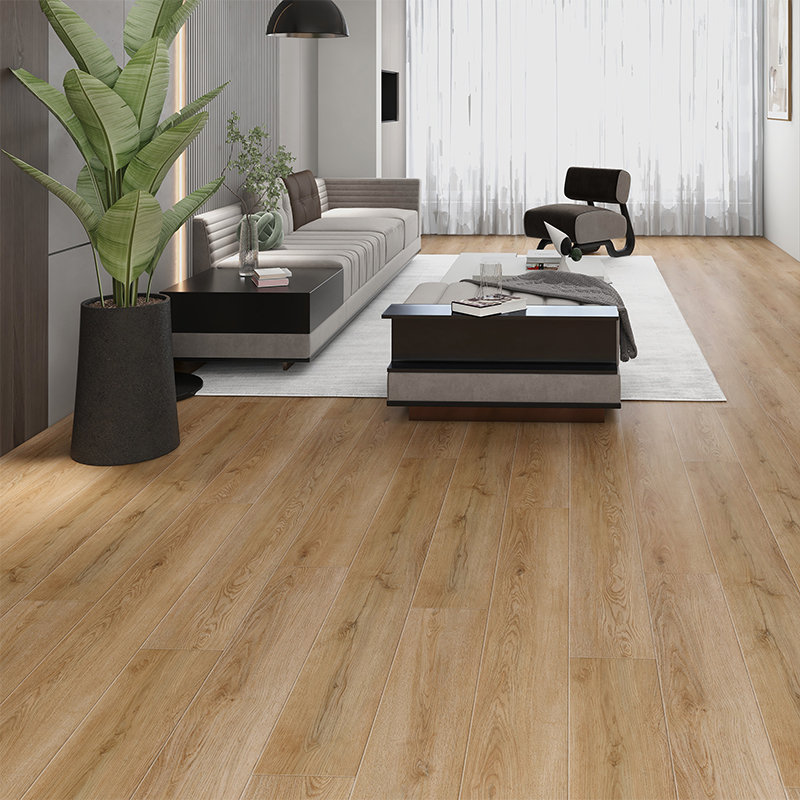
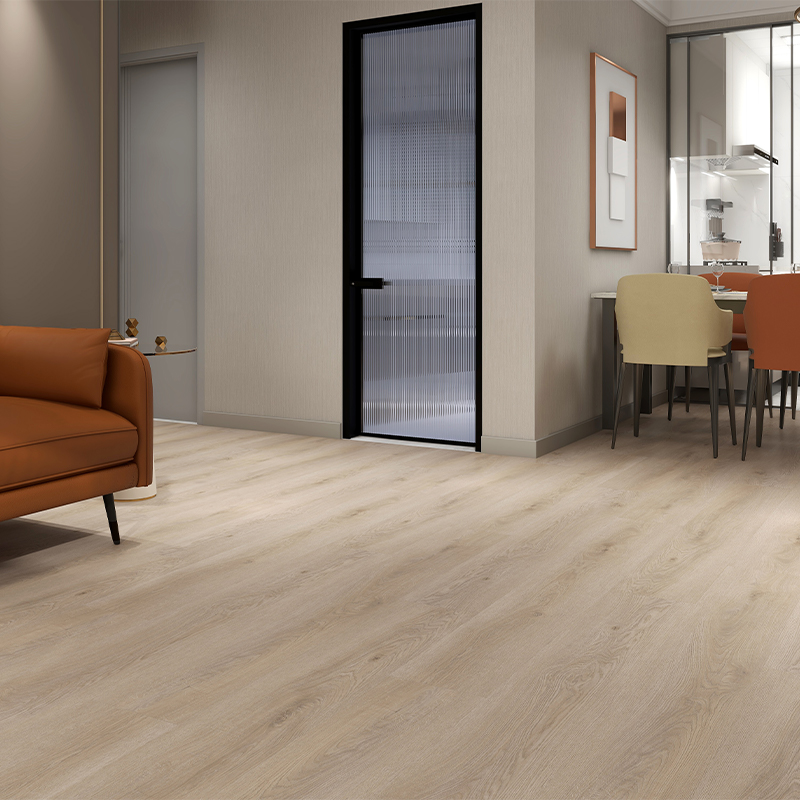 Waterproof SPC Click-Lock Vinyl Flooring PlanksThis rigid-core SPC plank offers high indentation resistance and dimensional stability, and its click-lock system allows adhesive-free floating installation with simple hand tools for efficient commercial projects.View Product →
Dry back PVC flooring, also called dry-back LVT, is the classic vinyl plank format. The term "dry back" means the reverse side has no pre-applied adhesive; the plank is installed by spreading a permanent or pressure-sensitive adhesive on the subfloor and pressing the plank into it. The core is a flexible PVC compound that feels slightly softer and warmer underfoot than an SPC core.
Because dry back planks are fully glued down, installers can heat-weld the seams to create a watertight, hygienic surface. This makes dry back PVC the standard recommendation for healthcare facilities, commercial kitchens, and other areas that need frequent wet cleaning. The trade-offs are stricter subfloor flatness requirements, adhesive curing time, and a more labor-intensive installation.
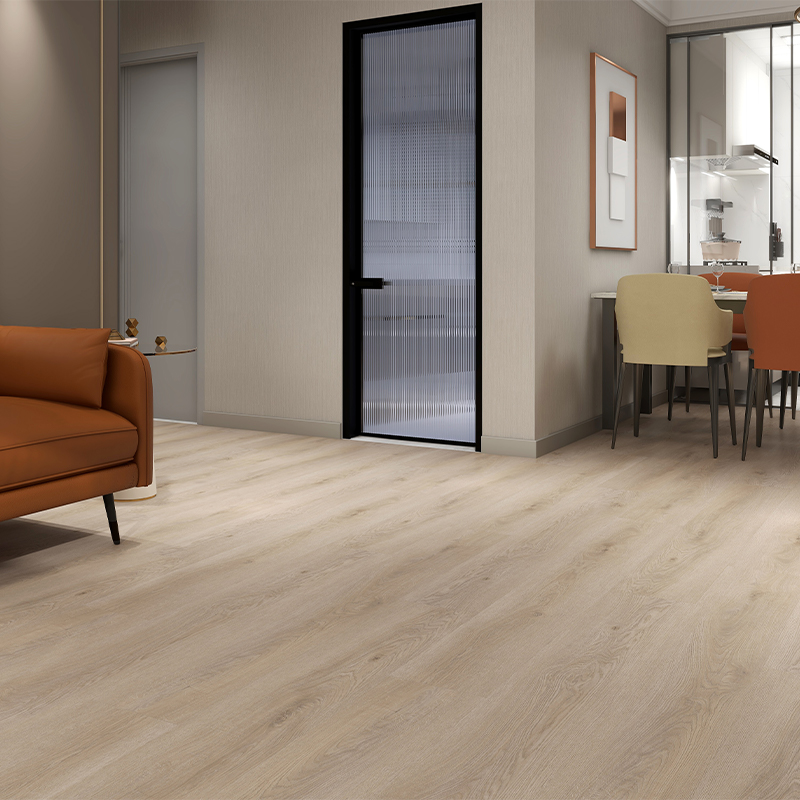
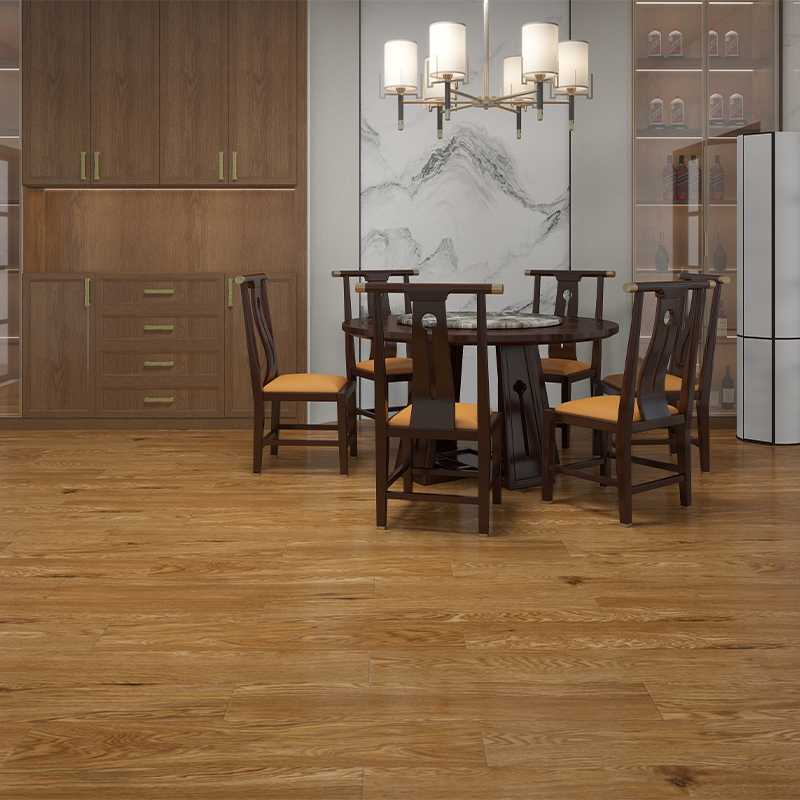 Adhesive-Fixed Waterproof Dry Back PVC PlanksThis thin-profile dry back vinyl flooring is permanently glued to a level subfloor and supports heat-welded seams, making it a hygienic, moisture-resistant choice for healthcare and food-service areas.View Product →
| Property | SPC Flooring | Dry Back PVC Flooring |
|---|---|---|
| Core material | Limestone + PVC, rigid | Flexible PVC compound |
| Typical thickness | 4 – 8 mm | 2 – 4 mm |
| Installation method | Floating, click-lock | Fully glued down |
| Indentation resistance | High | Moderate |
| Dimensional stability | High | Moderate |
| Heat-weldable seams | Not possible | Yes |
| Material cost | Higher | Lower |
| Installation labor cost | Lower | Higher |
Key takeaway: SPC wins on rigidity, stability, and ease of installation. Dry back PVC wins on seam-welding capability and lower material cost.
In a busy commercial building, the floor must cope with rolling loads, static point loads, and abrasive wear at the same time. Each construction responds differently.
The dense limestone core of SPC resists localized pressure much better than a flexible PVC core. A loaded storage rack or refrigerator base is far less likely to leave a permanent mark on SPC. Dry back PVC is softer at room temperature and, in warm environments where vinyl becomes more compliant, heavy static loads can create visible indentations. Standard residual indentation tests, such as EN 433 and ASTM F1914, consistently show lower indentation values for SPC than for dry back PVC of similar quality.
Temperature swings are common in commercial spaces: large windows, display lighting, and HVAC cycling all raise and lower the floor temperature. SPC's rigid composite core has a low thermal expansion coefficient, so joints remain tight and the floor plane stays flat. Dry back PVC is held in place by the adhesive, but the flexible planks themselves expand and contract along their width. If the adhesive has aged or was applied unevenly, open joints and ridges may appear over time.
The wear layer and topcoat determine most abrasion performance, and both SPC and dry back PVC can be supplied with commercial-grade wear layers of 20 to 30 mil. The difference is how the core supports that wear layer. Under a castor wheel or shopping cart, a rigid SPC plank distributes the pressure over a wider area, while the flexible PVC surface flexes slightly and concentrates stress at the wheel edge. In practice, SPC shows longer surface life under constant rolling traffic.
SPC floating floors rely on tight click-lock joints. Correctly installed, these joints stay snug and are difficult for water to penetrate, but they are not sealed, and prolonged standing water can migrate through micro-gaps. Dry back PVC, when heat-welded, creates a seamless watertight membrane. For this reason, dry back PVC is preferred in food preparation areas, washrooms, and hospital treatment rooms.
Dry back PVC installation is a skilled job. The concrete slab must be flat and clean, a moisture test is usually required, and the adhesive has to be applied with a trowel before every plank is set in place. The completed floor needs 24 to 48 hours to cure, which can delay opening in renovation projects. SPC installation is much faster: the planks click together on an underlayment of foam or cork, no adhesive is used, and the floor can take foot traffic immediately after installation.
In a high-traffic commercial floor, damage is a matter of when, not if. With an SPC floating floor, the damaged plank can be cut out, a spare plank inserted, and the locking system re-engaged with a pull bar. The job takes minutes and leaves no permanent trace. With a glued-down dry back floor, the damaged plank must be cut into strips, chiseled off the substrate, the old adhesive scraped away, new adhesive applied, and a replacement plank set in. That requires a professional installer and noticeable downtime.
Both floors clean well with dust mopping and a damp mop using a neutral pH cleaner. A factory-applied polyurethane coating means neither floor normally needs waxing or buffing. The practical difference is wet cleaning: a fully welded dry back floor can tolerate steam cleaners, heavy scrubbing, and standing water, while a floating SPC floor is best maintained with a well-wrung mop, and standing water should not be left pooling on the joints.
Slip resistance depends mainly on the surface texture and coating rather than the core. Both SPC and dry back PVC can be produced with embossed textures, and both can meet the slip-resistance levels typically required for commercial interiors. Fire performance is also strong for both: the calcium carbonate in SPC is naturally flame-retardant, and PVC is inherently self-extinguishing. Most quality SPC products achieve Class I in ASTM E648 and similar ratings without additional chemical treatment.
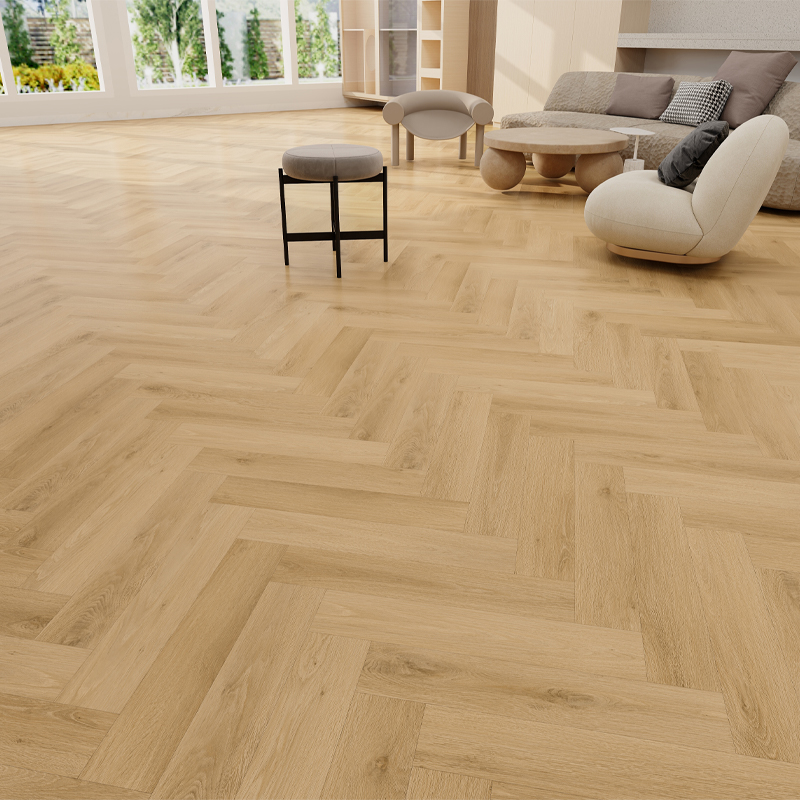
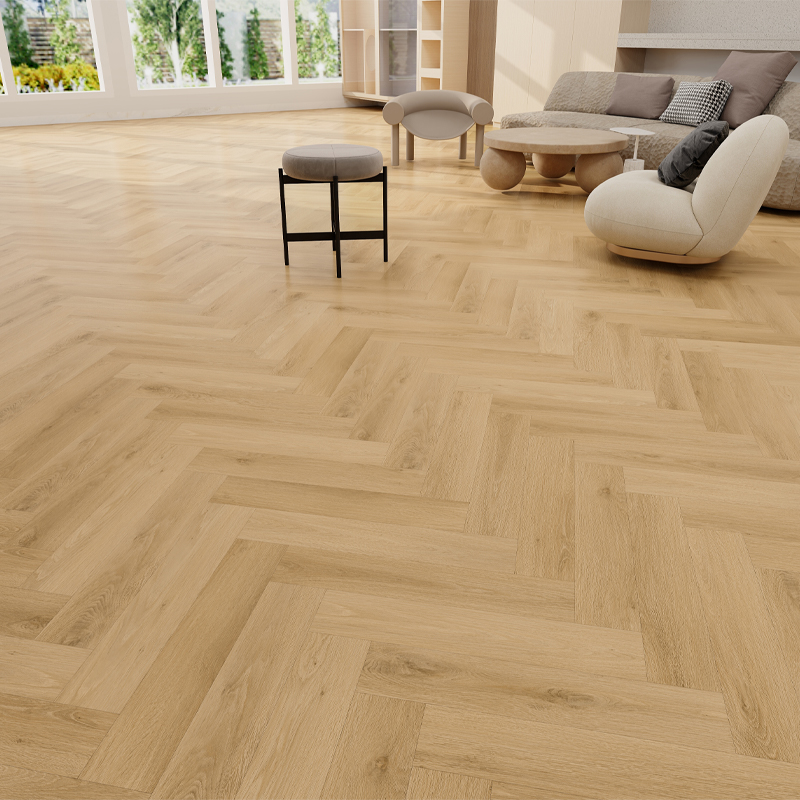 Fire-Resistant Herringbone SPC Vinyl FlooringFeaturing a herringbone pattern and Bfl-s1 fire resistance, this SPC flooring is fully waterproof and formaldehyde-free, offering durable, low-emission performance for residential and commercial spaces.View Product →
SPC is manufactured in the factory and installed without wet adhesives, so the installation phase adds almost no volatile organic compounds to the indoor air. Dry back PVC itself is low-emission, but the adhesive used on site must be selected carefully and requires cure time before the space can be occupied. For projects pursuing LEED or WELL certification, adhesive-free SPC installation makes the certification process a little easier.
| Cost component | SPC Flooring | Dry Back PVC Flooring |
|---|---|---|
| Material price per m2 | Higher | Lower |
| Installation labor | Lower | Higher |
| Occupancy delay | None | 24 to 48 hours |
| Plank replacement effort | Low | High |
| Cleaning requirements | Standard | Standard, welded seams easier |
On a typical 500 m2 retail floor, the material premium for SPC is often offset by roughly half the installation time and by avoiding a multi-day shutdown. Over a 10-year service life, the floating SPC system generally works out cheaper when repair labor is included.
No single floor is ideal for every space. The table below gives a practical starting point for common commercial zones.
| Commercial zone | Recommended option | Main reason |
|---|---|---|
| Retail aisles with carts | SPC | High indentation and rolling-load resistance |
| Cashier and queue areas | SPC | Static loads from customers and carts |
| Healthcare examination rooms | Dry back PVC | Heat-welded seams keep the surface hygienic |
| Restaurant kitchens | Dry back PVC | Watertight seams and heavy scrubbing tolerance |
| Open-plan offices | SPC | Castor chair loads and easy plank replacement |
| Hotel lobbies and corridors | SPC | Dimensional stability and balanced performance |
| Warehouse stockrooms | SPC | Heavy static and rolling loads |
Use SPC when you need maximum load resistance, fast installation, and low replacement effort.
Use Dry Back when the floor will face frequent wet cleaning and welded seams are essential.
Generally yes. The rigid limestone core of SPC resists indentation, stays dimensionally stable, and supports the wear layer better under rolling loads. Dry back PVC is durable when installed correctly, but its flexible core is more vulnerable to permanent marks from heavy point loads.
Yes, provided the seams are heat-welded and the adhesive is suitable for wet areas. A fully welded dry back floor is watertight and can tolerate steam cleaning and standing water, which is why it is common in commercial kitchens and healthcare facilities.
In most cases yes. A thin foam, EVA, or cork underlayment smooths out minor subfloor irregularities, reduces sound transmission, and adds a small amount of cushioning. For areas with acoustic requirements, cork or EVA underlayment is the better choice. Our SPC flooring range is compatible with all common underlayment types.
For normal retail and office traffic, 20 mil (0.5 mm) is the practical minimum. For entrance zones, supermarket aisles, and other high-abrasion areas, 28 to 30 mil (0.7 mm) is recommended. Both SPC and dry back PVC can be supplied with the required wear layer if the manufacturer offers a true commercial-grade product.
For the majority of commercial high-traffic applications, SPC flooring delivers the better combination of indentation resistance, dimensional stability, installation speed, and servicing convenience. Its floating click-lock format lowers labor cost, and individual planks can be replaced without disturbing the surrounding floor.
The clear exception is a space where the floor must resist water penetration at the seams or undergo frequent intensive wet cleaning. In those environments, dry back PVC installed with adhesive and heat-welded joints remains the safest, most hygienic choice.
Whichever construction you choose, the result will depend on product quality, subfloor preparation, and the honesty of the technical specifications. Evaluate the wear layer, core density, and warranty, and select a manufacturer that can document the performance of its products under real commercial loads.