English
 Why Acoustic EVA Foam Underlayment Is Essential for Reliable Floor Installation
Home > News > Industry News > Why Acoustic EVA Foam Underlayment Is Essential for Reliable Floor Installation

Content
Impact noise is one of the most frequent complaints raised in multi-level residential buildings, offices, and mixed-use developments. Footsteps, dragged furniture, and dropped objects travel through a rigid floor assembly as structure-borne vibration, reaching the space below far more effectively than airborne sound. When a project skips a dedicated acoustic layer, the finished floor may look flawless on installation day, yet the noise complaints often surface only after occupants move in, when correcting the problem means tearing out finished flooring.
Retrofitting acoustic control after installation is disruptive and expensive compared with including a purpose-built underlayment during the original build. This is why acoustic performance has moved from an optional upgrade to a baseline expectation in many building codes and multi-family specifications, particularly where impact insulation class ratings are enforced between living units.
A floor assembly without acoustic underlayment typically transmits impact noise almost unchanged, while a properly selected foam layer can measurably soften both the intensity and duration of that noise before it reaches the space below.
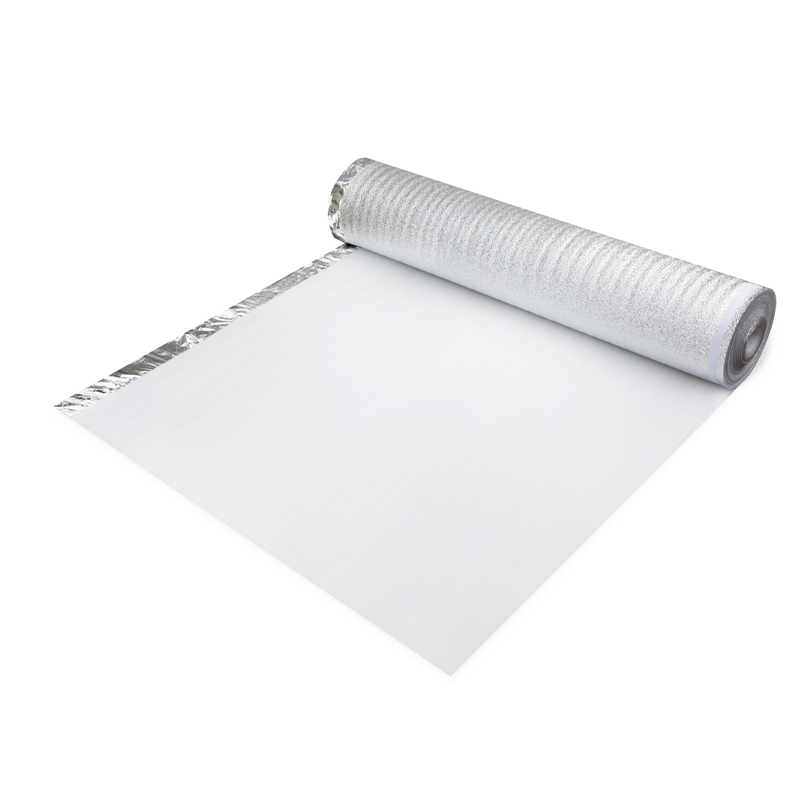
Ethylene vinyl acetate foam works as an acoustic buffer because of its closed-cell structure. Each cell acts as a small pocket of trapped air that compresses and rebounds under load, converting the kinetic energy of an impact into heat rather than allowing it to pass directly through the subfloor as vibration. This cellular behavior is what separates a functional acoustic layer from a simple cushioning material.
Two related but distinct performance areas matter for flooring projects:
Independent acoustic testing typically expresses impact performance as a rating improvement compared with a bare subfloor. The chart below illustrates how different underlayment categories generally compare in terms of relative impact rating improvement, based on common laboratory testing patterns across the underlayment category.
The pattern that emerges from this kind of comparison is consistent: denser, engineered closed-cell materials tend to outperform loose fiber or felt products because they compress uniformly and recover their shape after repeated loading, which keeps the acoustic layer performing consistently over years of foot traffic.
Acoustic underlayment does not perform identically across every frequency. Low frequencies, associated with heavier impacts and structural vibration, behave differently from mid and higher frequencies, which are more associated with footsteps and everyday activity. Reviewing a frequency response curve helps a specifier understand whether a product is suited to a particular building type, such as a gym floor versus a residential bedroom.
Reduction generally increases through the mid frequencies before tapering slightly at higher ranges, which lines up with how most footstep and impact noise is distributed. A well-engineered foam layer maintains a meaningful margin over standard fiber padding across nearly the entire tested range, rather than performing well only in a narrow band.
Sound absorption is only one factor in an installation decision. Moisture resistance, long-term compressibility control, durability under repeated loading, and ease of installation all influence whether a product performs reliably over the life of a floor. The radar comparison below summarizes how a closed-cell foam underlayment generally compares with a basic felt-style product across these five criteria, based on general material characteristics common to each category.
The gap widens most noticeably in moisture resistance and compressibility control, two areas where fibrous materials tend to degrade with repeated loading and ambient humidity, while a closed-cell foam structure resists water absorption and returns to its original thickness after compression.
Thicker is not automatically better. Performance depends on the balance between cell density and sheet thickness, since an overly soft or thick layer can create excessive give underfoot, which is undesirable beneath rigid flooring such as engineered hardwood or laminate. Most specifications settle within a moderate thickness range that balances acoustic gain against subfloor stability.
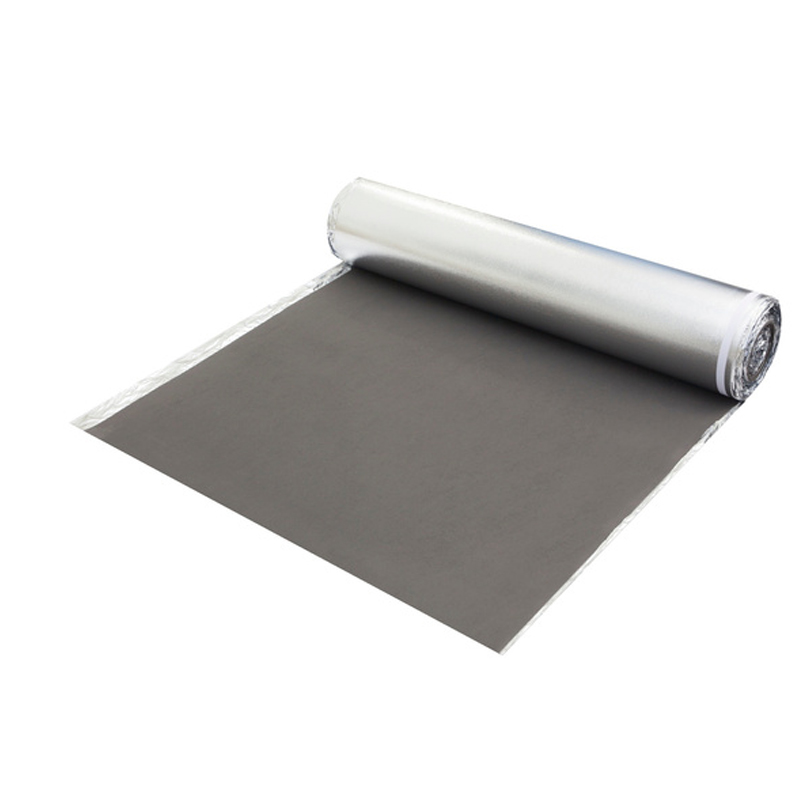
Beyond the acoustic curve itself, thicker sheets add labor considerations around seam alignment and transition heights at doorways, so the most cost-efficient choice is typically the thinnest sheet that still meets the required impact rating for the project rather than defaulting to the thickest option available.
Acoustic performance depends as much on installation quality as on the material itself. Gaps at seams, trapped debris, or an uneven subfloor can all create weak points where noise bypasses the foam layer entirely.
Seam taping deserves particular attention. Even a high-performance foam sheet loses much of its acoustic value if adjacent panels are left loosely butted rather than firmly taped, since sound will travel through the smallest continuous gap in the assembly.
The table below summarizes typical specification ranges referenced in project documentation, useful as a starting checklist when comparing submittals from different suppliers.
| Property | Typical Range | Relevance |
|---|---|---|
| Thickness | 2mm to 5mm | Balances acoustic gain against subfloor height and transitions |
| Density | Medium to high closed-cell | Determines long-term compression recovery |
| Impact rating improvement | 6 to 9 points | Key metric for multi-level building compliance |
| Moisture resistance | Low water absorption | Reduces risk under engineered wood and laminate |
| Compression set | Minimal after long-term load | Maintains acoustic performance over years of use |
| Recommended flooring types | Hardwood, laminate, engineered wood | Guides product selection by finish flooring category |
Rigid finish flooring, particularly engineered hardwood and laminate, transmits impact energy far more efficiently than resilient or carpeted surfaces because it lacks the natural cushioning of softer materials. This makes the underlayment layer disproportionately important to overall acoustic outcomes for hardwood projects, since it is often the only compressible layer in the entire assembly.
Acoustic EVA Foam For Hardwood Flooring applications also benefits from an additional practical advantage beyond sound control: a consistent, closed-cell layer helps even out minor subfloor irregularities, reducing the risk of hollow spots or creaking that can develop when hardwood is installed directly over an uneven substrate.
For installers working across a mix of residential and light commercial hardwood projects, specifying a consistent acoustic foam standard across jobs simplifies estimating, reduces callback risk related to noise complaints, and creates a more predictable finished result regardless of the specific subfloor conditions encountered on site.
EVA foam uses a denser, closed-cell structure that resists moisture and recovers its shape after repeated compression, while many standard padding materials are more fibrous and compress permanently over time.
Not necessarily. Beyond a certain thickness, gains in acoustic performance level off while installation complexity and transition height issues increase, so matching thickness to the required rating is more effective than maximizing thickness alone.
Yes, it is commonly used beneath floating engineered wood and laminate systems, where it also helps reduce minor subfloor irregularities in addition to controlling impact noise.
Very important. Untaped or loosely aligned seams create gaps where sound can bypass the foam layer, reducing the effective acoustic performance of an otherwise well-specified product.
A closed-cell foam layer with low water absorption can contribute a secondary moisture buffering benefit, though it should not replace a dedicated vapor barrier where subfloor moisture testing indicates one is required.